


SEIKO BUYING GUIDE | BEST SEIKO WATCHES TO BUY

Updated: Jul 22
The Best Seiko Watches to Buy: A Theowrist Guide.
Seiko is a dangerous brand.
Not dangerous like Rolex, getting physically abused and mugged. Not dangerous like a Hublot, getting verbally abused and outcast. Dangerous because Seiko is where many watch collections begin, and where many watch collections quietly begin spiralling. You buy one. Then you realise there is another one. Then you realise there are (deep breath) divers, field watches, dress watches, quartz icons, mechanical oddities, discontinued Japanese domestic market legends, reissues, reinterpretations, limited editions, colour variants, weird old chronographs, Alpinists, Turtles, Samurais, Sumos, Monsters, Cocktails, Speedtimers, Astrons, so on and so forth. Seiko is not just one of the best affordable watch brands. It is one of the most important watch companies full stop.
Seiko SKX009 dial Seiko Prospex Alpinist Night Edition SPB337J1 Seiko 5 SRPJ41 Kosuke Kawamura Limited Edition Seiko Spirit SARB070
A selection from my collection.
But that doesn't mean every Seiko is a bargain. It doesn't mean every Seiko is worth buying. And it definitely doesn't mean you should pay silly money for a discontinued model just because the watch internet/fans/bro's (aka the horolosphere) has got itself worked up again...been there done that. I will add a loaded point - I think, if you don't have a Seiko in your collection, then you're not a real watch collector. Controversial? Maybe. Facts are facts my dude, deal with it. It doesn't matter what you can afford, what matters is understanding the history of horology and the nuance around these special Japanese watches. We're not covering vintage here, but some probably classify as neo-vintage already.
Anyway, this is the sensible Seiko buying guide. Sensible-ish. We are still talking about watches, so let’s not pretend we are doing something rational or noble - unless you buy find and buy a SARB073. Then you would become a legendary, hero and save the world.
SECTION LINKS
A Quick History - Why Seiko Matters
Seiko’s story starts in 1881, when Kintaro Hattori opened a shop selling and repairing watches and clocks in Tokyo. That sounds modest, because it was, but Seiko didn't remain modest for long.

By 1892, Hattori had established the Seikosha factory to “produce precise, exquisite clocks” and, hence, the name “Seiko-sha” (House of Exquisite and Precision Manufacturing). In 1913, Seiko produced the Laurel, Japan’s first wristwatch. In 1924, the first watch carrying the Seiko name appeared. From there, the company became one of the great forces in modern watchmaking.
This is where Seiko gets interesting. It was not just making watches. It made Japanese watchmaking impossible for the world to ignore.
Seiko Laurel 1913 Seiko Laurel 1924
Seiko made Japan’s first self-winding watch in 1956. It introduced the Magic Lever automatic winding system in 1959, a simple and efficient bit of mechanical cleverness that still sits behind many Seiko automatics. In 1960, Grand Seiko arrived as a serious precision-focused project.
In 1963, the Sportsmatic 5 helped create what became the Seiko 5 idea: robust, affordable, automatic, day-date, useful. It was the first wristwatch to be selected for the Good Design Award. In 1964, Seiko made Japan’s first wristwatch chronograph; followed by Japan’s first diver’s watch in 1965 and then in 1969, it released the Quartz Astron (below from left to right). They were on fire. The Astron was the world’s first quartz wristwatch - thus creating the quartz crisis - the tech and value sending Swiss and global watchmaking into a tailspin. They blazed a trail, changing the watch world as they went.
1963 Seiko Sportsmatic 5 Seiko Chronograph 1964 Seiko Diver 1965 Seiko Astron 1969
Just look at these pieces, they are as stunning today as they were back then. The design influence on today's cohort is evident. Some people like this DNA baked in, others prefer to change it up. Seiko have until recently managed to keep everyone happy with a mammoth catalogue of all shapes and sizes - now, the price is the problem.
I digress. The hits kept on coming, quartz, analogue, digital, oh and a TV watch in 1982. That is not brand fluff. That is a company repeatedly turning up at important moments in watch history wearing sensible, workerman shoes, and doing the work. Their heritage page (source of these images) is just a tour-de-force of innovation and out-of-the-box world first's.
The trouble now is that Seiko has become so broad it can be difficult to know where to start. Some models are genuine icons. Some are excellent daily watches. Some are overpriced. Some are historically important but not necessarily the best thing to actually wear. Some are better on paper than on wrist. Some are ruined by bracelets that feel like they're made out of rusty, old bike chains.
This is the point of the guide.
The Quick Answer: Which Seiko Should You Buy?
If you want a simple first Seiko, buy a Seiko 5 Sports (SRPL55, SRPL57, SRPK89).
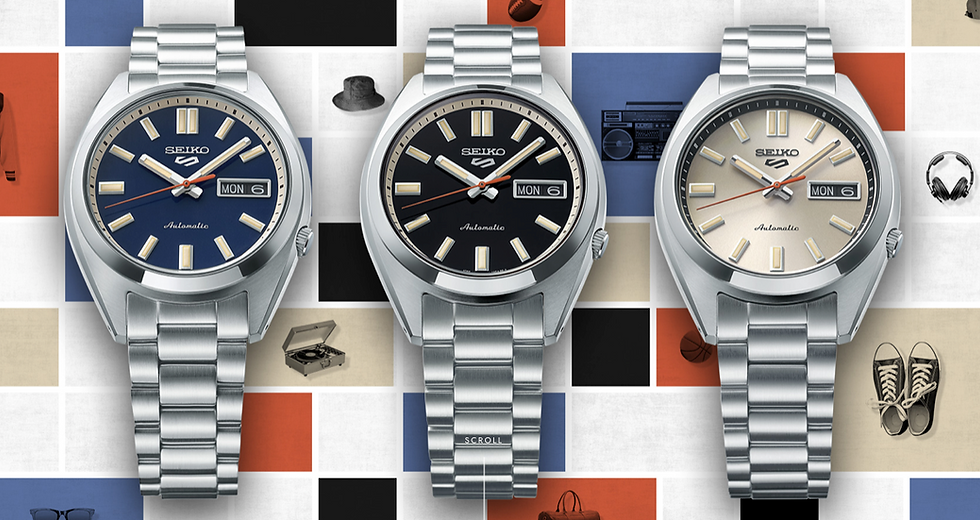
If you want a proper Seiko diver, buy a Prospex diver (HBB002 / SPB381) and choose the case shape/size carefully- try before you buy if you can.
Seiko Prospex Diver SPB381 Seiko Prospex Dier HBB002
If you want the charming (but not cheap) Seiko field-watch thing, buy an Alpinist (HBC007J1/SBEJ005), preferably one with the proper internal compass bezel if you want the full Alpinist flavour.
Seiko Alpinist HBC007 / SBEJ005
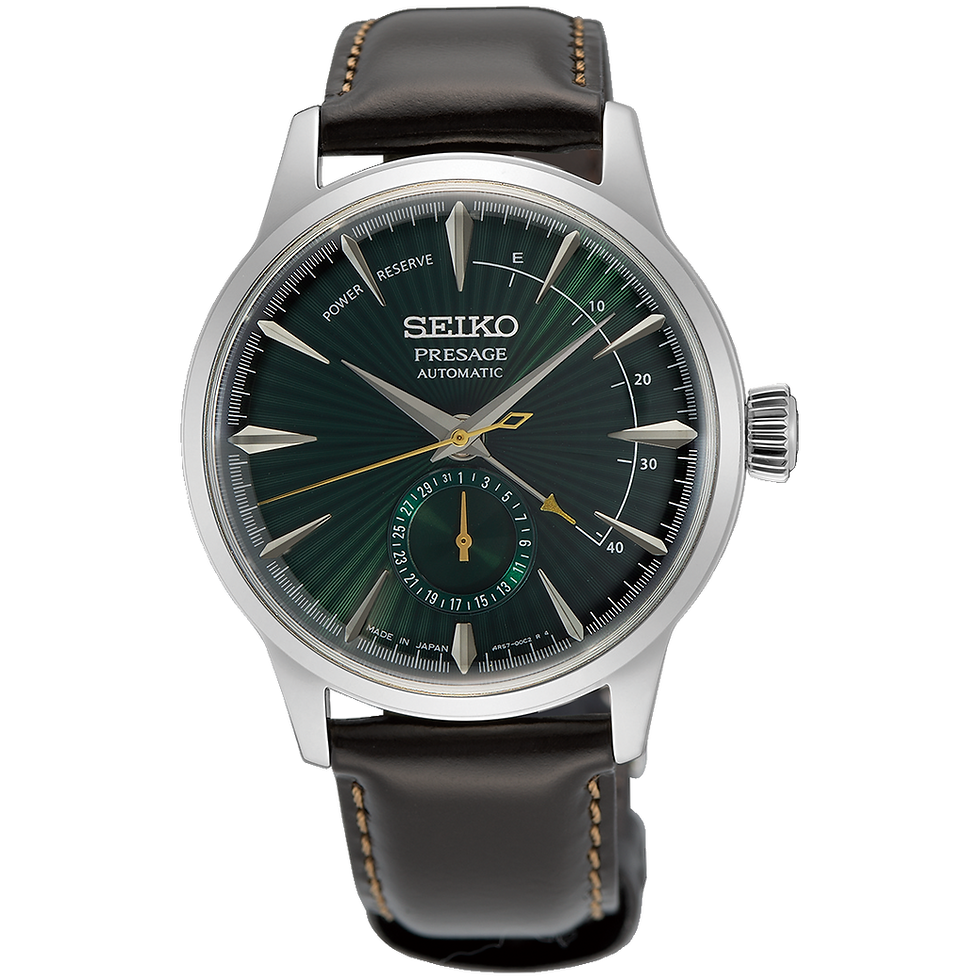
If you want something dressier, buy a Presage Cocktail Time (SSA459J1) - why not go for one with a power reserve to mix things up. There are lots of options and wallet friendly deals to be found.
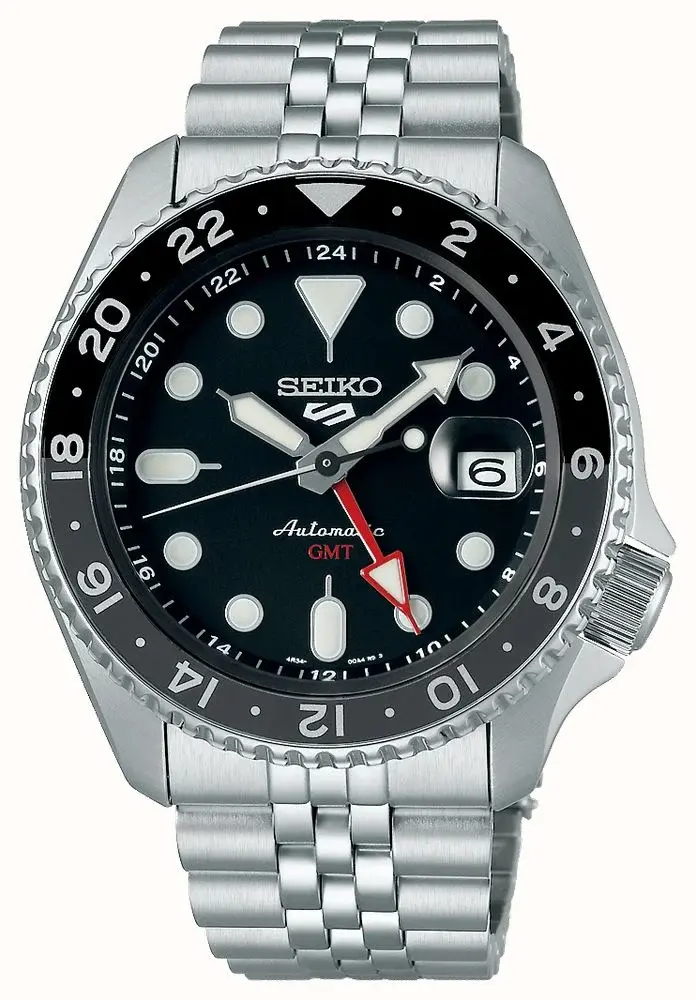
If you want a practical travel watch, with classic SKX energy look at the Seiko 5 GMT (SSK003K1) range. Also a great daily wear tool watch, and strap monster.
More info on all these below.
If you want the old-school collector hit, look at the SKX, SARB035, SARB033, SARB017 Alpinist, Flightmaster SNA411, or older Japanese domestic models, but do not go feral on price. The best Seiko is not the most famous one. It is the one that makes you feel feelings, the has the right size, case shape, movement, condition and price. That's less romantic, but much cheaper - then you can buy another Seiko with the money you save.
How to Buy a Seiko Without Being Taken for a Ride.
Before looking at individual models, here are a few questions you could/should ask.
1. What size actually works?
Seiko is good at making watches wear smaller than the diameter suggests. Not always. But often. A 42.5mm Seiko 5 Sports sounds big, but the lug-to-lug is around 46mm, which makes it far more wearable than the number suggests. A Turtle can be 45mm and still sit better than some supposedly “reasonable” 40mm watches because the case is cushion-shaped and the lugs do not reach out like Dracula’s deadly fangs.
Case size/diameter is not the whole story. Lug-to-lug matters. Thickness matters. Case shape matters. End links matter. Strap choice matters. Bezel width matters. Dial size/opening matters. This is why Seiko is so interesting for real-world wearability. The numbers often tell half the truth, and sometimes lie by omission.
2. Are you buying mechanical, quartz or solar?
Do not be a mechanical snob. Not with Seiko.
Seiko helped change the world with quartz. Solar Seikos can be excellent. A solar Speedtimer is often a better daily chronograph for most people than a thicker, more expensive mechanical chronograph. It is accurate, practical, grab-and-go and does not require you to pretend resetting a stopped automatic is a romantic ritual.
Mechanical Seikos still have charm. The 4R movements are not glamorous, but they are useful workhorses. The 6R movements give you a longer power reserve and a step up, although the accuracy expectations should remain adult and realistic.
Buy the movement that suits the watch, not the one that suits your fantasy of being a man in a linen jacket inspecting escapements under candlelight.
3. Is it actually a diver?
This matters because Seiko has a lot of dive-style watches. The Seiko 5 Sports SKX-style models look like divers, have rotating bezels and plenty of character, but they are not the same thing as the old ISO-rated SKX divers or modern Prospex divers. Many current Seiko 5 Sports models are 10 bar water resistant and do not have screw-down crowns. That may be perfectly fine for normal life. It is not the same proposition as a 200m Prospex diver.
Do you need a proper diver? Probably not. Do you want one? Of course you do, otherwise what the hell are we doing here!
4. Can you live with Hardlex?
Hardlex is Seiko’s hardened mineral crystal. It is not sapphire. It can scratch. It is also part of how Seiko keeps certain watches affordable. Some people obsess over this. Sometimes rightly. Sometimes in that familiar watch-forum way where a man with 14 unworn watches is furious that his £280 Seiko does not have the spec sheet of a Tudor. Others will say the Seiko is way better than any Tudor. On a cheaper Seiko, Hardlex is fine. On a more expensive watch, lack of sapphire becomes much harder to excuse.
5. Are you paying for the watch or the legend?
This is the great Seiko trap. The SKX became iconic because it was affordable, rugged, distinctive and genuinely useful. The SARB035 became beloved because it offered a brilliant balance of size, finishing, design and value. The SARB017 Alpinist became a legend because it had real personality and a weirdly perfect blend of explorer, dress watch and field watch.
Then they were discontinued, and the internet did its usual nonsense. A discontinued Seiko can still be worth buying. Just don't pay for nostalgia or get FOMOtivation - there are deals out there, it just takes some perseverance and some luck.
Best Seiko Watches to Buy Now
Seiko 5 Sports
The Seiko 5 Sports is probably the easiest modern entry point into Seiko. It gives you an automatic movement, day-date function, useful water resistance, strong lume, a huge choice of colours and styles, and that familiar Seiko sports-watch feel. The current SKX-style models are chunky but compact, usually helped by the short lug-to-lug. They have presence without turning into wrist furniture.
Back in the days, when I was a lad, the SNXS (affectionately known as the Snax) was the daddy (see below SNXS73). 'Inspired' by the clean line functionality of the Rolex Oyster Perpetual, it was an instant hit. Sometimes called the most iconic 'Poor Man's Rolex' - I say start here and work your way to Rolex. If it wasn't for the bulbous caseback it would be one of the best watches ever made. As it stands it's just one of the best value watches ever made.
Seiko 5 SNXS73 Seiko 5 SNXS73 Seiko 5 SNXS73
Nowadays, Seiko have gone a bit funny in the head, a bit loco, when it comes to the SNXS. They recently released an SNXS series, but the model numbers are SRPL, SRPK which is nice in a way but also lame. The Seiko SRPL55, SRPL57, and SRPK89 are below (L to R) for your perusal. They look great, and you can see the design influence. They are good value at below £300 / $300 - but you can still get a brand new (old stock) SNXS, a real Snax for around £150 / $200 - the bracelets suck fyi.
Seiko 5 Sports SRPL55 Seiko 5 Sports SRPL57 Seiko 5 Sports SRPK89
Next up, the standard SRPD-style models (SRPD59, SRPD73K2, SRPD53 below L to R), they are not direct SKX replacements, even though they clearly carry more than a hint of that visual DNA. The SKX was a proper diver. The Seiko 5 Sports is more of a casual sports watch with dive-watch energy. And that's fine. The sizing stays true to the OG at 42.5mm for the case and 46mm for the lug-to-lug, making them prominent on the wrist but very wearable.
Case Size SRPL: Thickness: 12.5mm | Diameter: 37.4mm | Lug-to-lug: 44.7mm
Seiko 5 SRPD59 Seiko 5 SRPD57 Seiko 5 Sports SRPD53
The Seiko 5 Sports is at its best when you accept it for what it is: an affordable automatic sports watch with character. Not a luxury watch. Not a professional diver. Not the second coming. Just a proper, useful, enjoyable watch.
Look at models like the SRPD55 if you want the classic black-dial version. Look at the smaller or newer variants if you want something less chunky. Look at the limited editions only if you genuinely like the design, not because of the words “limited edition”.
Case Size SRPD: Thickness: 13.4mm | Diameter: 42.5mm | Lug-to-lug: 46.0mm
SEIKO 5 SPORTS
Best for: first automatic Seiko, casual everyday wear, affordable collecting
Watch out for: Hardlex, bracelet quality, paying extra for hardly different colourways
The Theowrist view: the Seiko 5 is usually best when it is simple, wearable and not pretending to be more serious than it is. I might have to buy one - green dial on a deal.
Read The Theowrist Seiko 5 SNXS73 review here.
Seiko 5 GMT
The Seiko 5 GMT (SSK) range is one of Seiko’s smartest modern moves. It has the look of the old SKX series, though it is by no means a diver. The link has led to its nickname - the 5KX. Cute.
The Black dial SSK001 (above) and its siblings (yellow dial SSK017K1) took the familiar Seiko 5 sports case and added a GMT function through the 4R34 automatic movement. It is not a true traveller GMT in the luxury-watch sense, but it gives you a mechanical office GMT at a price that remains broadly sensible. (The True GMT describes a watch in which the half-pulled position allows the local hour hand to jump in 1-hour increments, similar to higher-end GMT movements (such as Rolex). An Office GMT describes a watch where the half-pulled position rotates the GMT hand in one direction and the date wheel in the opposite direction.)
The watch is attractive, well-sized and functional. That should not be underrated. You get a 24-hour hand, rotating GMT bezel, automatic movement, decent size, proper wrist presence (they are thick) and enough Seiko personality to stop it feeling like a spreadsheet with hands. The case is still 42.5mm, but again the lug-to-lug keeps things wearable for many wrists. The Hardlex crystal is not for everyone. Nor is the cyclops. Nor is the bracelet - they are strap monsters though. But as a real-world travel-adjacent watch, it makes a lot of sense.
Case Size SSK: Thickness: 13.6mm | Diameter: 42.5mm | Lug-to-lug: 46.0mm
Seiko GMT SSK025
There are also field-style GMT models such as the (above), which shrink the diameter to under 40mm but carry a longer lug-to-lug. That is the kind of Seiko sizing inconsistency that makes it necessary to check numbers twice and try things on. It's a looker though and at around £300 / $400 it' s a damned good deal.
Case Size SSK025: Thickness: 13.6mm | Diameter: 39.4 mm | Lug-to-lug: 47.9mm
Seiko 5 GMT
Best for: affordable mechanical GMT, travel, daily wear
Watch out for: case thickness, Hardlex, whether the cyclops annoys you
Theowrist view: one of the better modern Seiko buys if you want function and style rather than another basic three-hander.
Seiko Prospex Divers
This is where Seiko gets serious. The Prospex dive range carries much of the brand’s historical weight, going back to Japan’s first diver’s watch in 1965. Seiko’s dive-watch history is not decorative. It's central to why the brand made it and why it still matters.
The classic Seiko diver appeal is not just about water resistance. It is about the architecture: big bezels, strong hands, deep dials, chunky cases, 4 o’clock crowns, tactile grips, dials that can be read at a glance and enough lume to light your way into the unknown of salty deep.
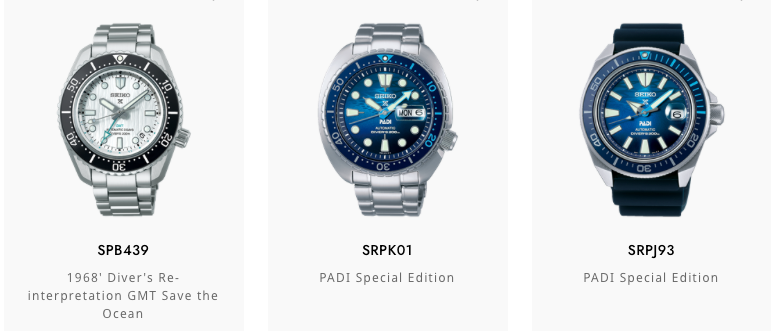
The Prospex range includes many different flavours. Turtles, Samurais, 1965-inspired divers, 1968-style divers, solar divers, mechanical divers, serious Marinemaster models and various limited editions that may or may not need to calm down.
For most people, the sweet spot is not the most expensive one. It is the one that gives you a proper 200m diver’s specification and the case shape/dimensions that make sense on your wrist.

The SPB317 is a good example of modern Seiko doing something genuinely wearable: 41mm case, slim-ish 12.3mm thickness, 46.9mm lug-to-lug, 200m diver’s water resistance and the 6R35 movement. It has that vintage Seiko diver energy without becoming a heavy steel biscuit. The retail price, is pricey, at £860 / $900, but there are deals to be had, many alternatives and almosts.
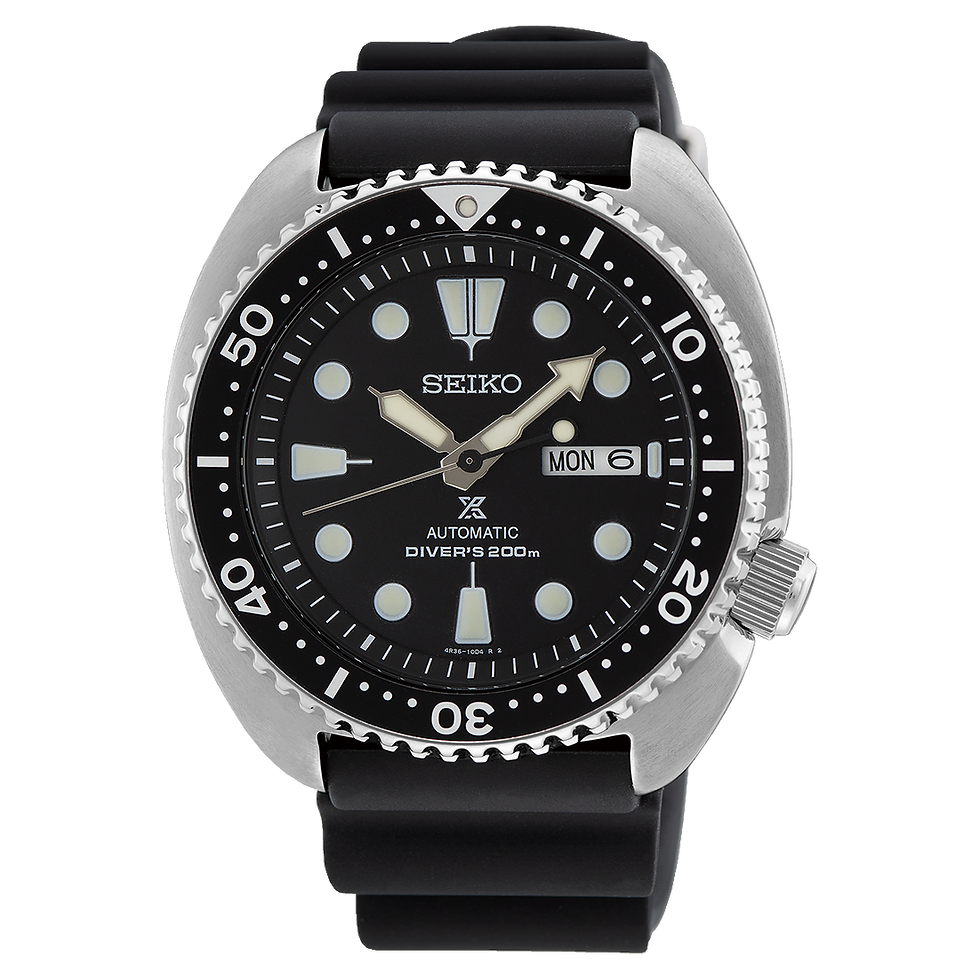
The SRPE93 Turtle gives you more old-school Seiko charm at a lower price, it's often called the Turtle Reissue (the first being released in 1976 (ref 6306)). It features the 4R36 movement and 200m diver’s spec, but at 45mm it's made for legibility, needs the right wrist and the right tolerance for cushion-case proportions. Lug-to-lug is reasonable, at 48mm considering the case size - but there's no getting around the fact it's a bit chunky. The price is less chunky at £379 / $420. A Seiko diver should feel robust, legible and slightly overbuilt. If it feels dainty, something has gone wrong. But what a Seiko deiver never used to be was overly expensive. Things have changed.
Case Size SRPE93: Thickness: 13.6mm | Diameter: 45 mm | Lug-to-lug: 48mm
An honourable mention for the Seiko Prospex Samurai SRPF03K1, the big daddy of Seiko Divers. The angles and aggressive design made this one of my faves. It's been around for years but you can still buy these new for around £350 / $450.
Seiko Prospex Samurai SRPF03K1 Seiko Prospex Shogurai SRPL13
I think it's been discontinued, but respawned as the 41.7mm Seiko Prospex 4R 'Shog-urai' (Shogun x Samurai - I dunno) SRPL13K1, above right. Similarly edgy and aggro, it's a nice update, it's sleeker but still a large package. I usually don't love the date at 4:30 but it's so hidden it works.
Case Size SRPF03: Thickness: 13.4mm | Diameter: 43.8 mm | Lug-to-lug: 48.4mm
Case Size SRPL13 : Thickness: 12.3mm | Diameter: 41.7mm | Lug-to-lug: 49.5mm
Balance, as ever, is where the joy lives. Here is a pre-filtered link, to Seiko Prospex Diver's on the Seiko Watches site, for your convenience - you're welcome. Choose wisely.
Best for: proper dive-watch history, robust daily wear, Seiko at its most Seiko
Watch out for: thickness, alignment issues, heavy bracelets, limited-edition temptation
Theowrist view: buy the right one and you will have a friend forever, if you get it wrong, there are plenty more Seiko Diver's in the sea.
Seiko Alpinist
The Alpinist is one of Seiko’s most interesting and charming lines because it doesn't fit neatly into one category. It is sort of a field watch. Sort of an explorer watch. Sort of a dressy sports watch. Sort of a compass watch, if you buy the version with the internal rotating compass bezel. It is also one of the few watches that can look mildly eccentric and completely sensible at the same time. It's bonkers and everyone loves it. Well, they used to.
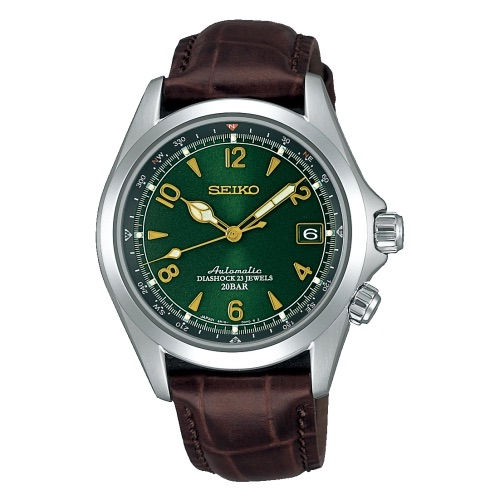
The original Alpinist line goes back to 1959 with the Laurel Alpinist, designed as a robust watch for Japan’s growing interest in trekking and mountaineering. The modern cult version is the SARB017, released in 2006, with its green dial, gold-tone markers, cathedral hands, internal compass bezel and dual crowns. It should not work as well as it does. It does. It was discontinued in 2018, and as the decent pieces dwindled, the price predictably climbed.

The current iteration is the SPB121, released in 2020 it carries much of that look forward: 39.5mm case, 6R35 movement, around 70 hours of power reserve, sapphire crystal with magnifier, internal compass ring and 20 bar water resistance. On paper and on wrist, it remains one of the most honest and complete Seiko designs.
Case Size SARB017 : Thickness: 12mm | Diameter: 39mm | Lug-to-lug: 46mm
Case Size SPB121 : Thickness: 13.2mm | Diameter: 39.5mm | Lug-to-lug: 46.4mm
Case Size SPB155J1 : Thickness: 12.9mm | Diameter: 38mm | Lug-to-lug: 46mm

There are also “Baby Alpinist” models, hmmm, let's be honest. They are nice watches, but if there is no internal compass bezel and no dual-crown weirdness, the full Alpinist magic has been partially removed. It's a like eating a burger without a bun, it ain't a burger no more - it's a steak haché, a mince beef puck with salad. Above we have the 38mm SPB155J1 baby Alpinist, it nice but it ain't no proper Alpinist, and it ain't that much smaller.
These are proper... top row SPB503J1, SPB505J1, bottom row HBC007, SPB117J1 - these models share the same proportions as the above SPB121. Arghh, too many reference numbers...
Seiko SPB503J1 Seiko SPB505J1 Seiko Alpinist GMT HBC007J1 Seiko Alpinist SPB117J1
There is something extra cool about having 'alpinist' text on the dial -- I would have that teal dial Alpinist (SPB503J1), it's called the Tealpine but it's £880 / $950. The Alpinist is for people who want character but not (too much) chaos. It's distinctive without going too bonkers. It dresses up, dresses down, and carries just enough strange detail to keep you looking at it. Let's not forget the best of the modern bunch, my Alpinist Black Series Night Edition (SPB337J1) - it's real nice.

Best for: one-watch collection candidates, small-to-medium wrists, field-watch charm
Watch out for: cyclops uncertainty, polished surfaces, inflated prices on discontinued SARB017 models - devilish behaviour.
Theowrist view: the proper Alpinist is one of the best Seikos ever made because it had a unique, unapologetic design identity and created a niche for itself - it's babies are keeping that going.
Read The Theowrist Seiko Prospex Alpinist Night Edition SPB337J1 review here.
Seiko Presage Cocktail Time
The Presage Cocktail Time range is where Seiko reminds everyone it can do dials.
These watches are not tool watches. They are dressy, shiny, textured, reflective and occasionally more dramatic than your average watch needs to be. The only problem with these is that I don't own one.
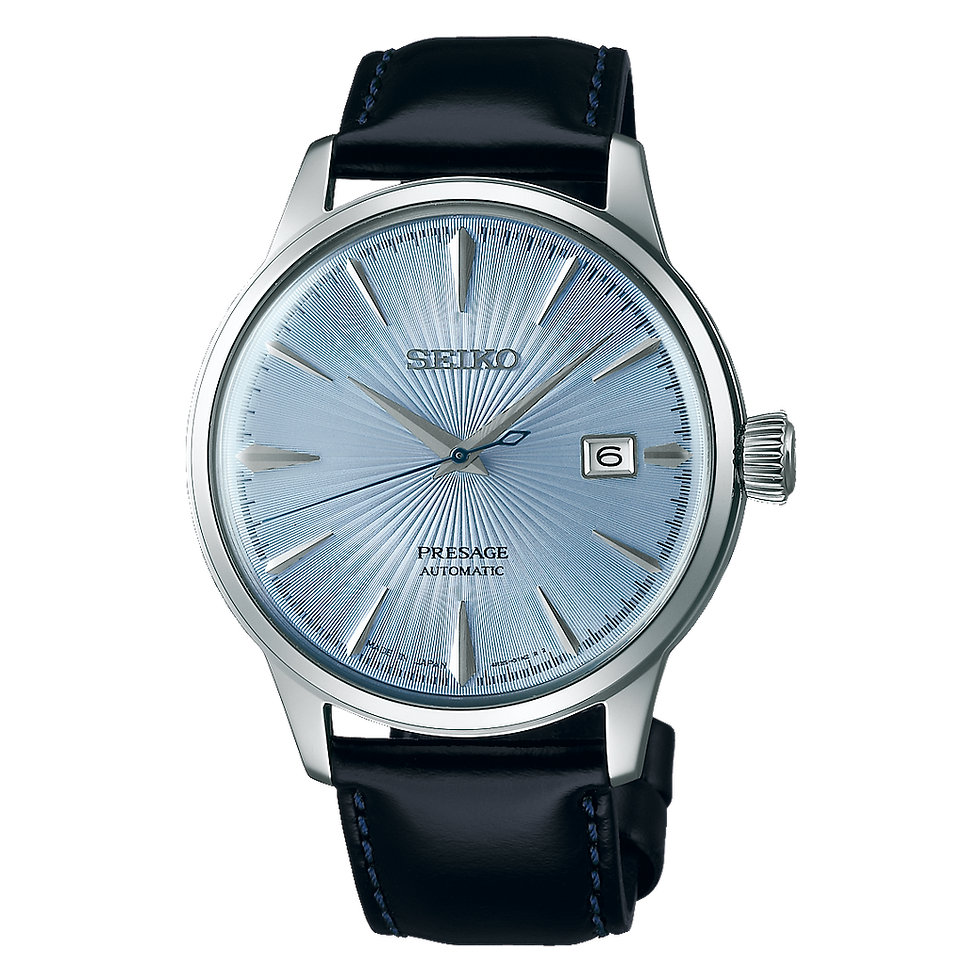
The SRPB43 is a classic example: 40.5mm case with 47.5mm lug-to-lug, automatic 4R35 movement, box-shaped Hardlex crystal and that pale dial that looks simple until the light hits it and suddenly it is doing little dial theatre. The watch is dressy without being sterile. It has a timeless design quality and is one of the those Seiko's that will be a beauty 20 years from now and then some. It's great value too, coming in at £350 / $450, and with deals to be had you can't go wrong. They made a smaller 33.8mm version (SRP841), they should have just made a 37mm and then everyone would have been happy.
Case Size SRPB43 : Thickness: 11.8mm | Diameter: 40.5mm | Lug-to-lug: 47.2mm
Seiko Presage SRPE45 Seiko Presage SRPB41
Presage is also where you need to be careful. Some models are excellent value. Some creep up in price and start bumping into competition with better crystals, better bracelets, power reserves displays, slimmer cases or stronger specs. A Cocktail Time on leather, bought sensibly, can be superb. A more expensive Presage needs more scrutiny.
Also, check size carefully. A 40.5mm dress watch can wear larger than expected because there is often less bezel and more dial. This is the sort of thing that is easily missed shoppers miss and wrists punish. Sadly I don't own one of these, and the main reason is because I never found a deal when I was in the market - there are deals to be had though.
Seiko Presage SPB169 Seiko Presage SRPD97 Seiko Presage SPB495J1
There are so many other Presage models that look fantastic and offer good value for money, but the Cocktail Time is the one that everyone knows and loves. The Sharp Edged Series SPB169 (above left) is also a fan fave, they are versatile and have a reserved swagger that goes a long way. The less known SRPD97 (middle) Japanese Garden is perfectly sized at 38.3mm and 43.6mm for one watch, GADA, beauty but you won't be able to find one. There are numerous stunning enamel dialled offerings too, like the Seiko Presage Craftsmanship SPB495J1 (right), they are a bit pricey but enamel dials often are. In general they offer great value for a rare feature. I want one so bad.
Best for: dressier Seiko, dial texture, affordable elegance
Watch out for: large dial openings, Hardlex at higher prices, shiny cases that scratch if you look at them with doubt
Theowrist view: Cocktail Time is Seiko doing affordable dial pleasure properly. Just do not buy one too large.
Seiko Speedtimer
The Speedtimer name carries real weight because Seiko was there at the birth of the automatic chronograph era in 1969. Modern Speedtimers come in several forms, including solar chronographs and mechanical chronographs. For most buyers, the solar versions make the most sense. They are slimmer, more affordable, accurate, practical and still carry the sporting chronograph look.
The older ones though really hold the hearts of many a watch fan.
Seiko Speedtimer SSC813P1 Seiko Speedtime SSC947
The excellent looking and robust 39mm Speedtimer solar models (SSC813P1 - above left)) are especially attractive if you want a chronograph that doesn't wear like a dinner plate. The larger 41.4mm models (SSC947 above right aka the Pogue reissue) also remain wearable, helped by fairly controlled 45.9mm lug-to-lug dimensions. The Pogue is a much-loved, design classic, but it's not for the meek. The V192 solar movement gives you chronograph functionality, a power reserve indicator and normal daily practicality without the servicing concerns of a mechanical chronograph. These come in at a very reasonable £660 / $725.
Case Size SSC813P1 : Thickness: 13.3mm | Diameter: 39mm | Lug-to-lug: 45.9mm
Case Size SSC947 : Thickness: 13mm | Diameter: 41.4mm | Lug-to-lug: 45.9mm
Seiko Speedtimer SSC813P1 Seiko Speedtime SRQ053J1
The mechanical Speedtimers (SRQ055J1 - above left, SRQ053J1 - above right) are more enthusiast-focused and more expensive. They have the romance, but they are thicker, costlier (£2320 / $2500 for the above - oooeee) and need a buyer who specifically wants that mechanical chronograph experience and Seiko story. Although, the SRQ055J1, on the left, looks a bit too much like an Omega Speedmaster for comfort. Be honest with yourself. If you want a chronograph as a daily wear often, solar is not a compromise. It may be the smarter choice. Plus, it's always nice to get a variety of complications and technical features in your collection.
Case Size SRQ055/53 : Thickness: 14.6mm | Diameter: 42mm | Lug-to-lug: 49.5mm
Best for: practical chronograph, Seiko history, grab-and-go wear
Watch out for: busier dials, larger models, mechanical chronograph thickness
Theowrist view: the solar Speedtimer is the grown-up choice, even if the mechanical one makes the collector brain twitch. I don't own one, and I probably never will but they are cool pieces with history.
Seiko SKX007 and SKX009
The SKX is the Seiko that refuses to leave the conversation. The SKX007 (below right) and SKX009 (below left) became legends because they were affordable, robust, ISO-rated dive watches with proper personality. The SKX009, with its Pepsi bezel, is particularly charming. It has that excellent Seiko trick of being visually busy but still balanced: bold hands, clear markers, deep chapter ring, crown at 4 o’clock, tsunami caseback, and enough geometry on the dial to teach shapes to a child. These come in a 42mm, but are quite wearable if you allow for the thickness, I've heard some like it thick.
Seiko SKX009J1 Seiko SKX007J1
But the SKX is discontinued. This changes the buying dynamics. The old appeal was value. The current appeal is icon status. Those are not the same thing. If you already own one, enjoy it - I do enjoy mine. If you find a clean one at a sensible price, consider it. If someone wants modern money for a used SKX with scratches, dings and a dirty strap - say no thank you, and keep hunting. The SKX is still great. The market around it is sometimes less great.
Case Size SKX007/009 : Thickness: 13.5 mm | Diameter: 42.5mm | Lug-to-lug: 46mm
If you want to show yourself how truly amazing you are then buy a Seiko SCM023 Perpetual Calendar. It's included here as it looks very much like a SKX but it's date only, and smaller at 39mm. What's a perpetual calendar? I hear some of you ask. I hear others realise, that like me, you didn't think there would be mention of such a lauded complication in this post. Well, there is, and as you might have guessed it's a calendar that once set, doesn't need to be reset - it knows when to change the date correctly for months that are 30 or 31 days. What sorcery is this!? I dunno. Anyway, it's a quartz, the battery is good for 8 years or so, and if you keep that up, once set it will change the date correctly up until the year 2100. Magic. I want one. Check it out here...
Best for: Seiko collectors, classic dive-watch charm, discontinued icon status
Watch out for: inflated prices, fakes/frankenwatches, tired condition, poor bracelets
Theowrist view: still one of the most compelling Seiko designs, but no longer the obvious value king.
Read The Theowrist Seiko SKX009J1 review here.
Seiko Spirit SARB035 and SARB033
The SARB033 (below right) and SARB035 (below middle) are among the most beloved modern Seikos for good reason. The formula is simple: 38mm case, restrained dial with kitkat markers, razor sharp hands, excellent proportions, strong finishing for the money, useful everyday style and enough refinement to feel special without shouting. They are stunners. The SARB035 in particular has that creamy dial and balanced case that make it feel like Seiko accidentally wandered into a more expensive room and behaved impeccably.
It is classy but not fragile. Dressy but not precious. Sporty enough on the bracelet. Better on the wrist than in many photos. Annoyingly good... really, supremely good.
Seiko SARB070 Seiko SARB035 Seiko SARB033
I added the SARB070 (left) for your viewing pleasure.
But again, discontinued Seiko rules apply. Do not pay a ridiculous premium just because the letters SARB have appeared and everyone has gone misty-eyed. There are now alternatives from Seiko, Citizen, Orient Star, microbrands and the used market. Saying that, nothing compares with the SARB. It is brilliant. In my opinion, it's just below the Rolex OP's, and that's because the movement is kinda basic in comparison, but considering it's 10 times cheaper, I think that's a win. Part of me wants to say be careful not to overpay, the other part says, just buy it it's worth it!
Case Size SARB035 et al : Thickness: 11.5 mm | Diameter: 38mm | Lug-to-lug: 44.5mm
Best for: everyday dress-sports watch, smaller wrists, collectors
Watch out for: overpricing, polished case scratches, condition
Theowrist view: one of the best proportioned Seikos of the modern era and one of the best looking/proportioned watches I own/ever made. I'll be sensible and say, worth buying, but only if the price has not entered the mile-high club...
Read The Theowrist Seiko SARB 035 review here.
Seiko Flightmaster SNA411
Talking of mile high, oh what a segue. The Flightmaster SNA411 is a wonderful bit of Seiko excess. It is a quartz pilot’s chronograph with a slide-rule bezel, busy dial, compact wear and a level of functional visual madness that somehow just works. It looks complicated because it is complicated. Or at least it looks like it could calculate something important before you decide to use your phone - it's a clever one.
Seiko Flightmaster SNA411 Seiko Flightmaster SNA411 Seiko Flightmaster SNA411
The even more clever bit is the wearability. It is around 42mm, but the case is compact and the lug-to-lug is much friendlier than expected at 44mm on a strap but a mammoth 49mm on the bracelet (due to the endlinks being fixed) - somehow it still works on a smaller wrist. The dial is extremely busy, but that's the point. This is organised chaos, functional clutter, maximalism. It just looks excellent. On the more sensible side, the bracelet is fantastic, one of Seiko's budget finest.
Case Size SNA411 : Thickness: 13mm | Diameter: 42mm | Lug-to-lug: 44mm/49mm
New, old stock examples can still be found, but for pre-owned ones condition matters. So does price. As with many Seikos, the moment a model becomes “cult”, sellers start acting like they personally escorted it from the factory. It's a fantastically fun piece and a fan fave for a reason. Creation Watches have new ones in stop for around £514/ $688 and decent pre-owned ones will be £300-£400 / $400-$535.
Best for: quartz chronograph fans, pilot-watch oddness, compact complicated watches
Watch out for: used condition, bracelet/end-link fit
Theowrist view: weird, useful, compact and very Seiko. A proper enthusiast’s watch, I have one, I love it but it needs a new battery - they cost like £30, I'm loathe to pay when I can do it myself but I don't want to do it just incase I spoon it, it's a conundrum.
Read The Theowrist Seiko Flightmaster review here.
Three More Seiko Icons Worth Knowing: Monster, Tuna, Arnie, King and Astron
Warning: many upcoming watched are not for the small wristed. Each one of these legends comes from a specific Seiko idea: cmaximum legibility, deep-sea professional function, digital-analogue utility, or causing a crisis. They are worth knowing even if you don't want to buy one, they explain a lot about why Seiko has such a strange hold over collectors.
Seiko Monster
The Seiko Monster is one of the most recognisable affordable Seiko divers of the modern era. The original references to know are the SKX779 Black Monster and SKX781 Orange Monster, both first-generation models from the early 2000s. The Monster was not designed to be elegant. Its whole point was underwater usability: huge hands, large luminous markers, a deeply gripped bezel and a case that looks built around function rather than politeness. Seiko’s own design story describes the SKX779 as the origin of the series and explains that the oversized hands, indices and bezel numerals came from the practical aim of making the watch easy for divers to use.
Seiko Monster SKX779 Seiko Monster SRP315 Seiko Monster SRPD25
The second-generation SRP315 Orange/Black Monster (above middle) also deserves specific mention. For many collectors, this is one of the defining Monster variants made from 2012: the orange dial, black PVD bezel, shark-tooth-style markers and updated 4R36 movement give it a stronger, sharper identity than the earlier model. It also added hacking, and hand-winding. For me this is the monster I know, and the markers, I thought, were the defining feature, but it's just the brutal styling and size. There is a new version, the SRPD25 (above right), it's bigger in the flesh but smaller in the photo. And I think it's got less attitude despite being bigger.
Case Size SKX779 : Thickness: 14mm | Diameter: 42mm | Lug-to-lug: 48mm
Case Size SRP315 : Thickness: 13mm | Diameter: 42mm | Lug-to-lug: 47.7mm
Case Size SRPD25 : Thickness: 13.4mm | Diameter: 42.4mm | Lug-to-lug: 49.4mm
Best for: affordable tool-watch character, chunky dive watches, collectors who like aggressive design
Watch out for: larger proportions, older bracelets, paying too much for sought-after discontinued references
The Theowrist view: The Monster never cared about elegance, and that's exactly why it works. It's unapologetically Seiko: distinctive, practical and instantly recognisable. If you want a diver with attitude rather than another Submariner lookalike, this is it.
Seiko Tuna
The Tuna is one of Seiko’s most important professional dive-watch designs. The key original is the Seiko Professional Diver 600m 6159-7010, often called the Grandfather Tuna. Released in 1975, it was Seiko’s answer to the demands of saturation divers who needed a watch capable of surviving conditions beyond ordinary recreational diving.

This is not just a nickname watch. The 6159-7010 was a major technical piece. It used a one-piece titanium case, an outer protective shroud, an L-shaped gasket designed to resist helium ingress without a helium escape valve, and a vented/accordion-style strap. Seiko’s own heritage material describes it as the world’s first diver’s watch with a titanium case and states that its development followed a letter from a professional diver describing failures at depths greater than 300 metres. And also, it looks like a can of tuna.
Seiko Tuna SBBN045 Seiko Tuna SBBN047
The newer model is the SBBN045 (above left) is a fan favourite, but it's not a toy watch, again, it's a serious piece of dive machinery. Powered by Seiko's legendary 7C46 high-torque quartz movement, it ditches hardlex for sapphire crystal and offers the unmistakable Tuna silhouette, excellent wearability and professional heritage at a more attainable price.
The boss Tuna, or the big ka'Tuna, is the Seiko Prospex Professional 1000m SBBN047 (above right). That's right 1000m, this one is not messing around. Affectionately known as the 'Darth Tuna' it's built around a one-piece titanium monocoque case protected by a black ceramic shroud, it is engineered for saturation diving with an extraordinary 1,000-metre water resistance and features the 7C46 professional quartz movement.
The Tuna matters because it's Seiko engineering with almost no concern for conventional beauty. The shroud protects the watch. The large case improves function. The dial is legible. The construction is purposeful. The result is not delicate. The result is one of the most purpose-built dive watches on the market: unapologetically large, technically fascinating and instantly recognisable to collectors who appreciate Seiko's professional diving heritage.
Case Size 6159-7010 : Thickness: 16.5mm | Diameter: 42mm | Lug-to-lug: 50.5mm
Case Size SBBN045 : Thickness: 14.1mm | Diameter: 47.7mm | Lug-to-lug: 48mm
Case Size SBBN047 : Thickness: 16.3mm | Diameter: 49.4mm | Lug-to-lug: 49.4mm
Best for: professional dive-watch heritage, quartz enthusiasts, collectors who appreciate engineering over convention
Watch out for: large case sizes, high prices on some references, explaining to non-watch people why you bought something that looks like industrial equipment
The Theowrist view: One of the most important dive watches ever made. The Tuna wasn't designed to win beauty contests; it was designed to solve problems. Odd, uncompromising and brilliant, it's peak Seiko.
Seiko Arnie
The Seiko Arnie is the collector nickname for Seiko’s 1980s analogue-digital hybrid diver, most closely associated with the H558-5000 / H558-5009 family. The nickname comes from Arnold Schwarzenegger, who wore the H558 in several major 1980s films, most famously Commando and Predator. That is why the watch became known as the “Arnie”. Released in 1982, the H558 (below left)was a genuinely forward-looking tool watch. Seiko describes it as the world’s first hybrid diver’s watch with both an alarm and chronograph. It combined analogue hands with a digital display, 150m water resistance and a highly legible, futuristic layout. It was also used by Japanese expedition teams in harsh environments, including Antarctic and Everest-related expeditions, which gives the watch more than just film-watch appeal.
Seiko Prospex H558-5009 Arnie Seiko Prospex SNJ025 Arnie
The Arnie sits somewhere between a Tuna, a digital tool watch and a survival instrument. It has the shrouded case language, strong legibility and practical complications, but without being a pure mechanical diver. The modern version is the Seiko Prospex SNJ025, a solar re-interpretation of the Arnie. It uses Seiko’s H851 solar quartz movement and its functions include a chronograph up to 100 hours, daily alarm, full-auto calendar to 31 December 2100, power-save function, battery-life warning and LED illumination. Also, it's cool af.
Case Size H558-5009 : Thickness: 11.5mm | Diameter: 45.5mm | Lug-to-lug: 46.2mm
Case Size SNJ025P1 : Thickness: 14.4mm | Diameter: 47.8mm | Lug-to-lug: 51.3mm
Best for: analogue-digital fans, outdoor adventures, 1980s action-film nostalgia and everyday practicality
Watch out for: chunky dimensions, busy displays and assuming it's just another ana-digi watch
The Theowrist view: Half dive watch, half survival tool, all character. The Arnie somehow manages to be nostalgic and futuristic at the same time. It shouldn't work nearly as well as it does, but it's one of Seiko's most entertaining watches.
A couple more quick ones...damn that Seiko catalogue.
King Seiko
King Seiko often lives in the shadow of Grand Seiko, but historically it deserves far more respect. Created in the early 1960s, King Seiko represented a parallel effort to build high-quality Japanese watches capable of competing with the best Switzerland could offer. While Grand Seiko ultimately became the flagship, King Seiko produced some beautifully proportioned dress watches that collectors increasingly appreciate today.
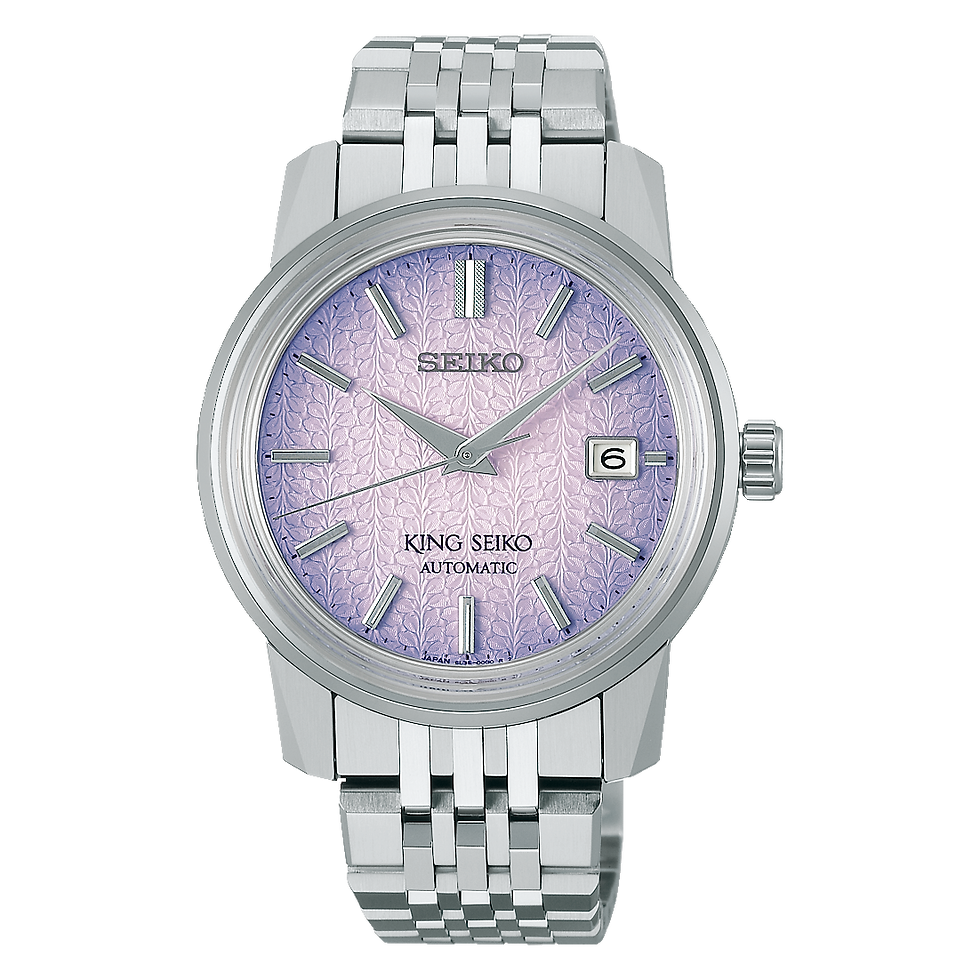
The modern reissues capture much of that restrained elegance. They're beautifully finished, wear extremely well and have excellent case design. The problem is value. Once prices creep towards £1,500–£2,000, Grand Seiko begins appearing on the used market, making King Seiko a much harder sell. I like some of them (SJE107 above - that dial), but I don't love the throwback designs. I also don't like the asking price.
Case Size SJE107 : Thickness: 10.7mm | Diameter: 38.6mm | Lug-to-lug: 45.8mm
Best for: vintage-inspired dress watches, excellent case finishing, enthusiasts who want something different from Grand Seiko
Watch out for: pricing, relatively basic movements at current retail and inevitable comparisons with Grand Seiko
The Theowrist view: I genuinely like King Seiko, but I struggle with the value proposition. The watches are handsome, beautifully proportioned and historically significant, yet they're often priced close enough to Grand Seiko that the buying decision becomes far more difficult than it should be.
Seiko Astron
Every watch enthusiast should know the Astron. It definitely deserves a bigger bit that this but it's a niche thing nowadays. In 1969, Seiko released the Quartz Astron, the world's first commercially available quartz wristwatch. It didn't simply introduce new technology. It completely changed the economics of watchmaking.
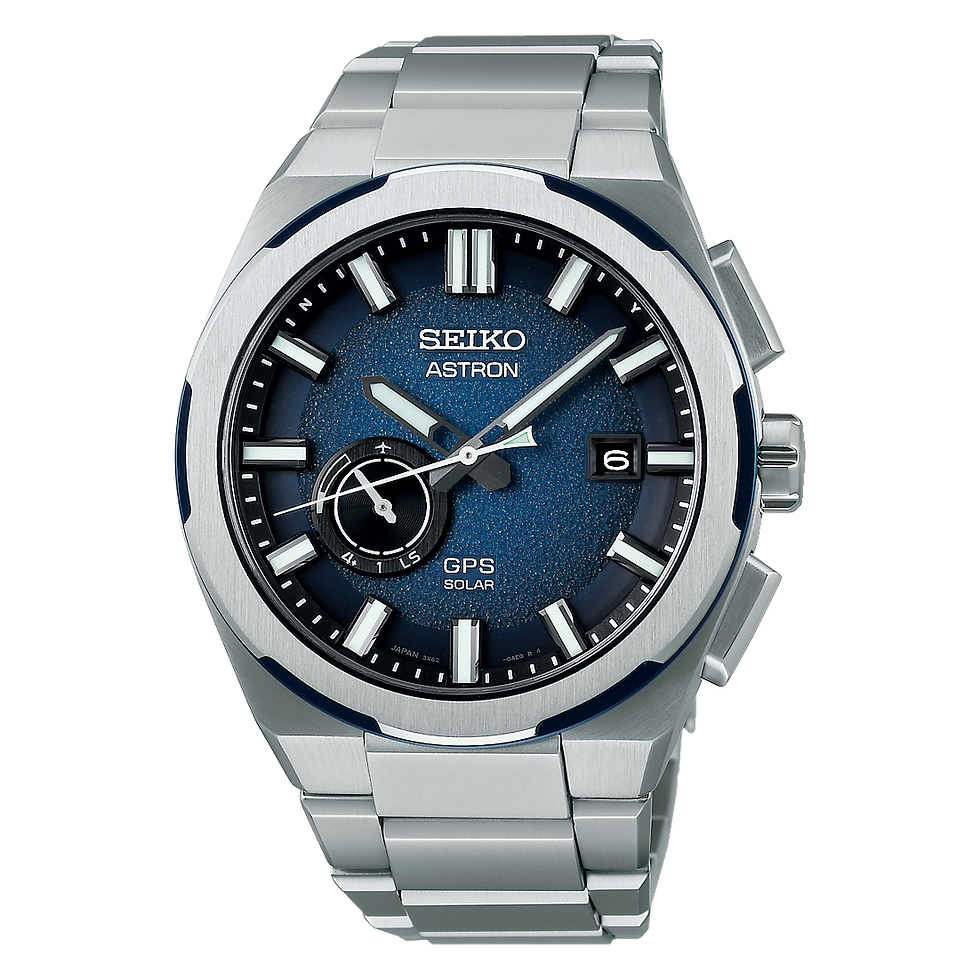
The resulting Quartz Crisis forced much of the Swiss industry into decline, reshaped manufacturing worldwide and permanently altered what buyers expected from a wristwatch. Today's Astron models are sophisticated GPS Solar watches capable of automatically adjusting to time zones around the world. They're technically brilliant.
Whether they're emotionally compelling is another question entirely. They resemble a Casio Edifice, which is clearly inspired by these Seikos, but it's the Casios that are more widely recognized, which is unfortunate.
Case Size SSJ023 : Thickness: 12mm | Diameter: 42mm | Lug-to-lug: 47.9mm
Best for: frequent travellers, cutting-edge technology, buyers who value convenience and accuracy above mechanical romance
Watch out for: larger cases, premium pricing and expecting the same emotional appeal as a mechanical watch
The Theowrist view: Every watch enthusiast should respect the Astron because it changed the industry forever. Modern Astrons remain astonishing pieces of technology, even if they're admired more with the head than the heart.
New, Used or Discontinued?
This is where Seiko buying becomes tactical.
Buy new if:
You want warranty, easy returns, current models and no faffing about with condition.
Many modern Seiko 5, Prospex, Presage, Speedtimer and Alpinist models are easy enough to buy new from authorised dealers. You may also find discounts, especially on non-limited models. Do not assume RRP is the law, there are deals to be had.
Buy used if:
You know the model, understand the market price, can check condition and are willing to wait. Used Seiko can be brilliant value. It can also be a swamp of polished cases, swapped parts (franken-watches), aftermarket bezels, tired straps, missing boxes and sellers using the word “rare” for shits and giggles.
Buy discontinued if:
You genuinely want that model for it's design and brilliance, not just the feeling of owning something the internet has declared important. The SKX, SARB035, SARB033, SARB017 and Flightmaster SNA411 are all worth considering.
Just remember: watches are awesome. Oh, wait, erm, also don't spend money you don't have, to impress people you don't know... unless it's a SARB - then you'll impress me.
The Theowrist Seiko Buying Rules
Buy for proportions first
A watch that fits badly is a watch you won't wear. Seiko makes many watches that wear better than their diameter suggests, but check lug-to-lug, thickness and end links before buying.
Do not worship specs
A sapphire crystal is nice and a more accurate movement is also nice. But watches are often more than the sum of their parts - cheesy but true. Seiko’s strength is often in the whole thing: case, dial, hands, lume, history, charm, wearability.
But do not ignore specs either
This is the annoying middle ground where adults live. A £300 Seiko with Hardlex is one thing. A much more expensive Seiko with compromises needs questioning. If you know the watch has a lame bracelet, find a deal that factors in the price of a new one.
Limited edition does not mean good
Seiko makes many limited editions. Some are excellent. Some are just blue. Or green. Or blue-green with a whale story and a box. Buy the watch, not the little number on the caseback. Unless it's a beauty, then go for it. There is a limited edition run of 10,000 for one of their models... they don't get it.
Bracelets matter
Seiko bracelets vary. Some are genuinely good. Some are fine. Some are between a poor excuse and a polite suggestion of a bracelet. As I mentioned, budget for a strap if needed, especially on those discontinued models. There are lots of aftermarket options from Uncle Seiko to Aliexpress.
Alignment matters
Seiko has had enough bezel/chapter ring alignment chatter over the years that it is worth checking before buying. There can also be second hand to second marker misalignment. I've never had an issue, well not yet or that I've noticed. Don't become obsessive, but do look.
The Best Seiko by Buyer Type
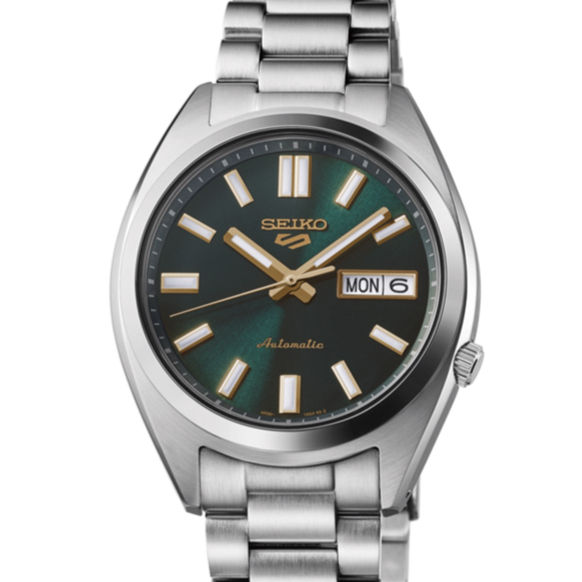
Best first Seiko
Seiko 5 Sports SRPD57
£200–280 / $260–325
Affordable, automatic, characterful and widely available. Also a great piece to experiment with straps. Other options include Seiko 5 Sports SRPD / SRPK / SRPE models offer plenty of colour options.

Best Seiko for smaller wrists
Seiko Field SRPJ85
£200–260 / $240–300
The Seiko Field gives that Seiko charm in small but functional package. Other options Seiko 5 Sports SRPK, Seiko Presage SRPD97, Seiko Alpinist SPB121 or Baby Alpinist variants.
Best Seiko diver for most people
Seiko Prospex SPB317
£650–800 / $750–950
A strong modern choice because it balances heritage, capability and wearability without being enormous.
Best affordable proper diver
Seiko Prospex Turtle SRPE93
£320–420 / $390–500
Classic Seiko diver energy. Big on paper, friendlier on wrist than expected.
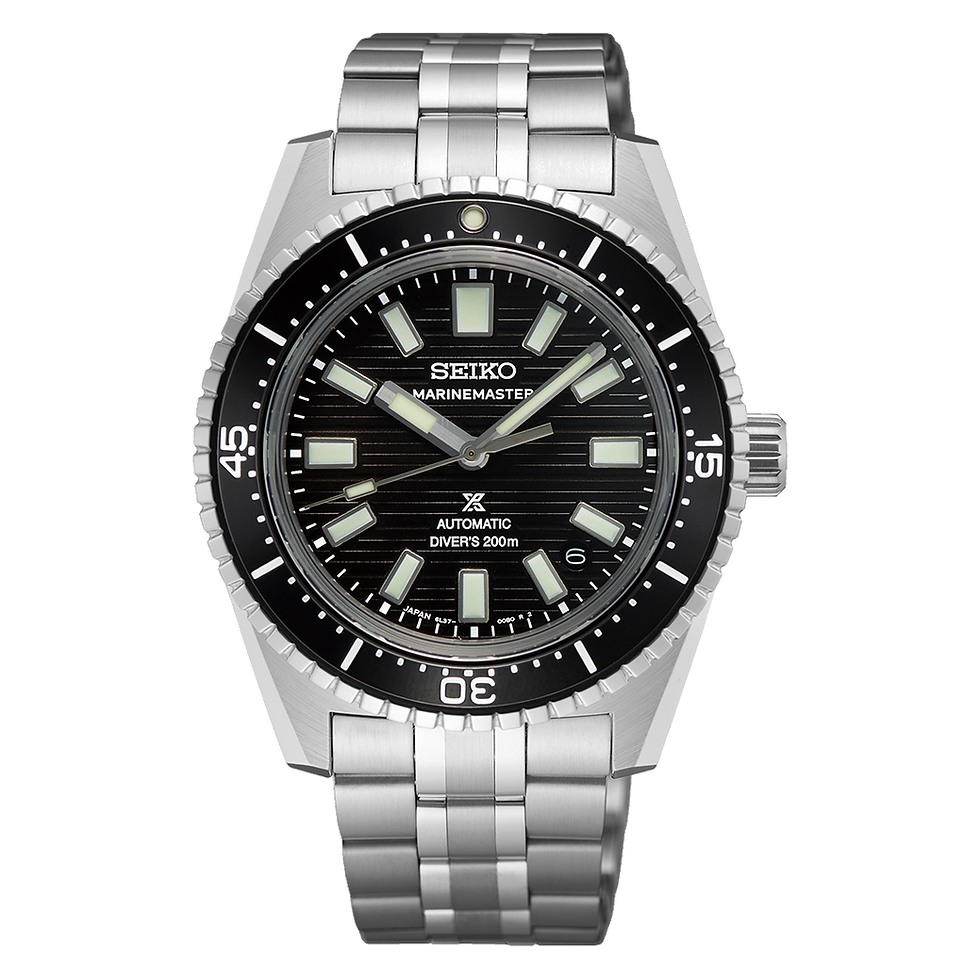
Best automatic proper diver
Seiko Prospex Dark Water Marinemaster 1965 Reinterpretation Diver SJE101J1
£2,300–2,900 / $2,900–3,600
Classic Seiko diver energy. Lovely detail. Friendly on wrist 39.5mm / 47.2mm.
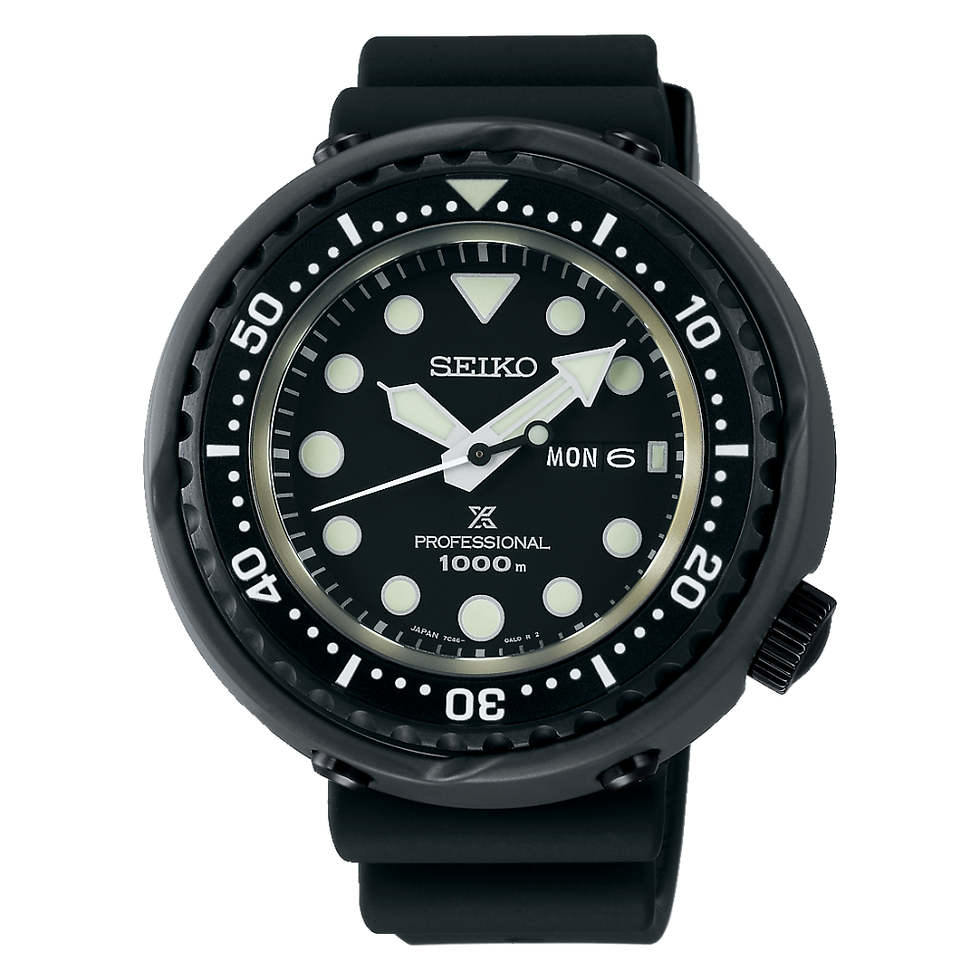
Best quartz proper diver
Seiko Prospex SBBN047 'Darth Tuna'
£1,200–1,500 / $1,500–1,900
Classic Seiko Tuna energy in brutal stealth mode, powered by Seiko's legendary 7C46 high-torque quartz movement.
Best dressy Seiko
Seiko Presage Cocktail Time SRPB43
£300–420 / $375–500
Great dial, useful automatic movement, dressy without becoming boring. Numerous similar Cocktail Time variations..
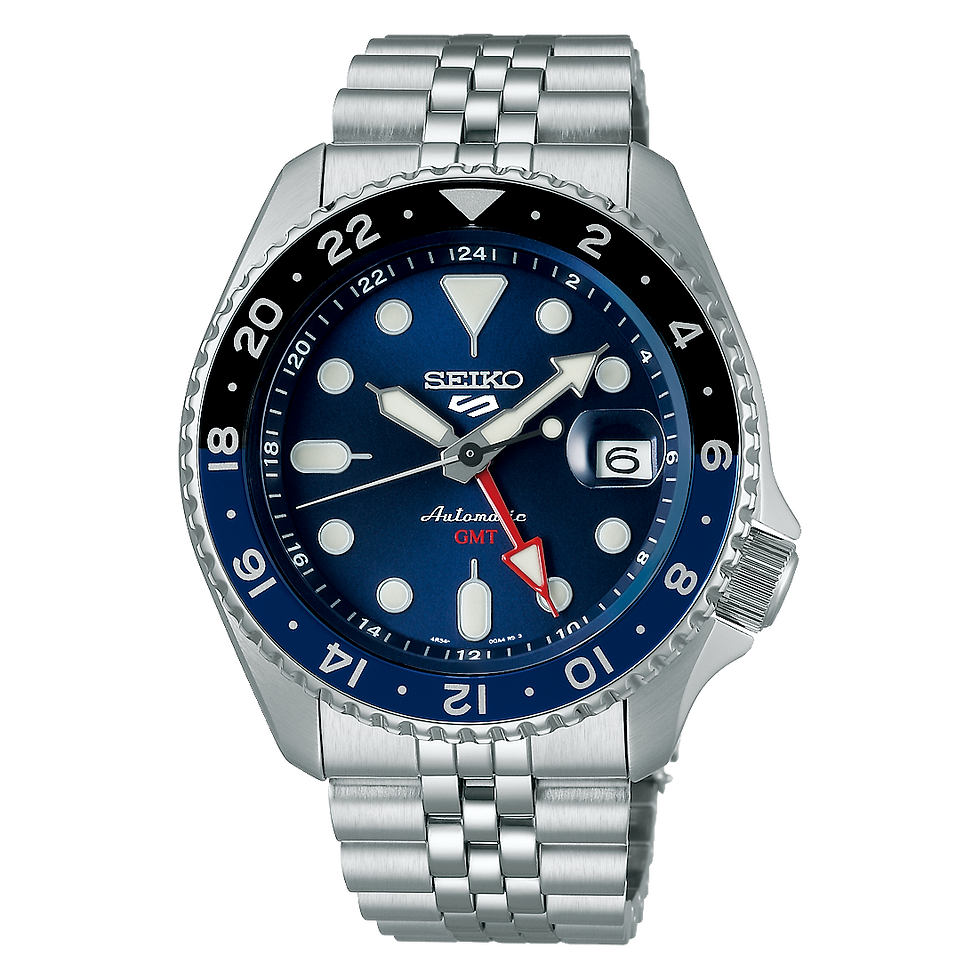
Best practical travel Seiko
Seiko 5 GMT SSK003
£320–420 / $375–500
Great looking blue dial option, affectionately known as the Blueberry. Mechanical GMT utility, with looks and at a still-sensible price.
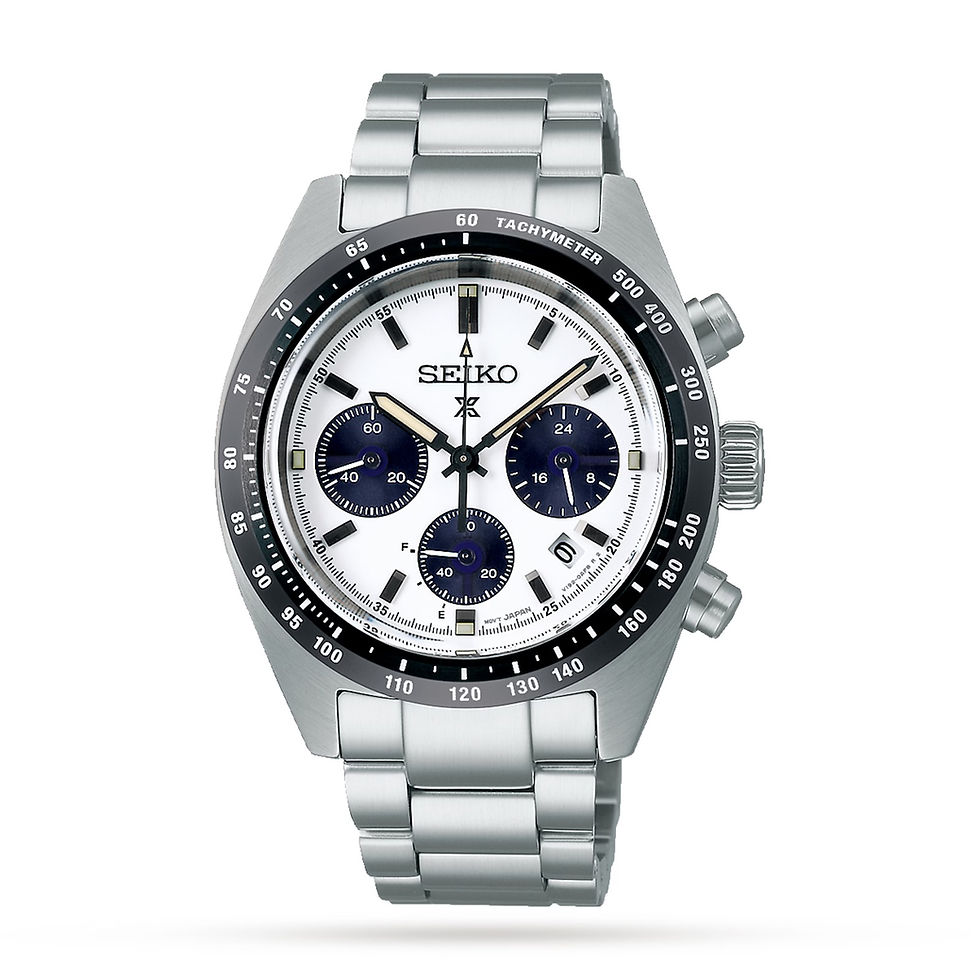
Best Seiko Chronograph
Seiko Prospex Speedtimer Solar SSC961
£500–650 / $570–700
The solar models are practical, wearable and connected to Seiko’s chronograph history without requiring mechanical-chronograph money.
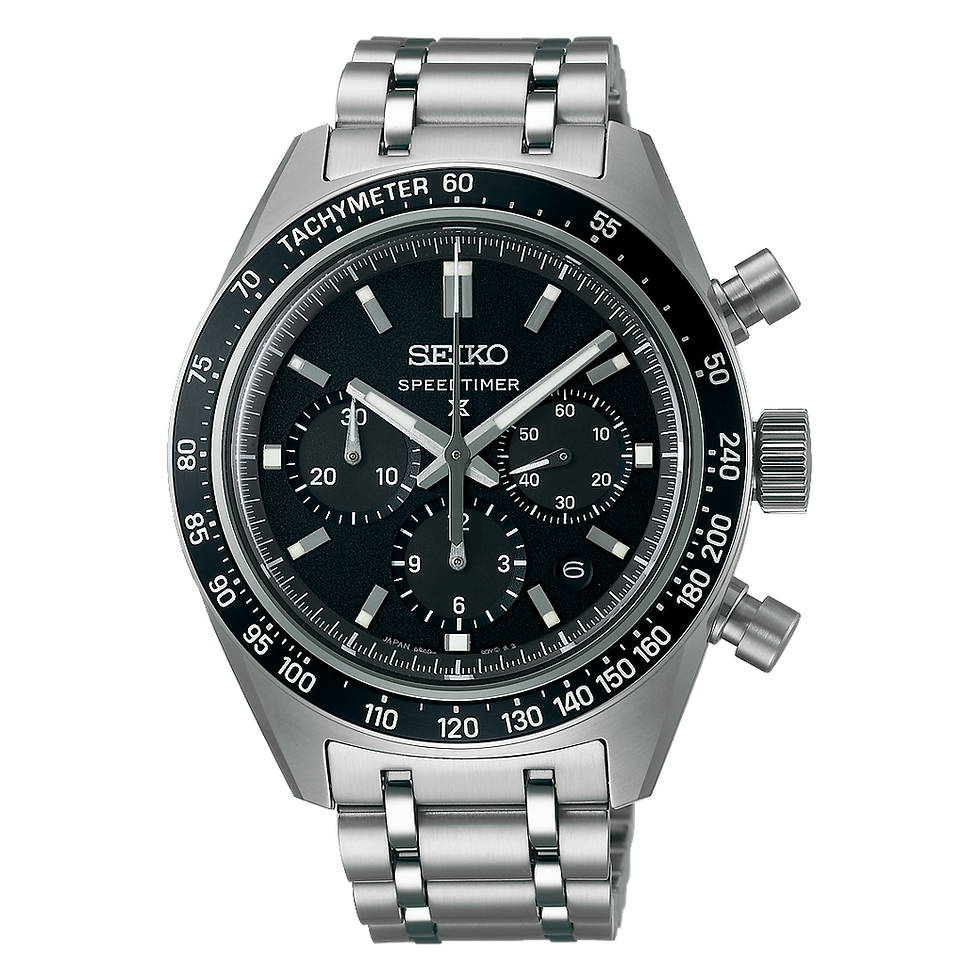
Worst Seiko Chronograph
Seiko Prospex Speedtimer SRQ055
£2,000–2,350 / $2,400–2,800
Maybe I've missed the point but just save up a bit more and buy a pre-owned Omega Speedmaster.
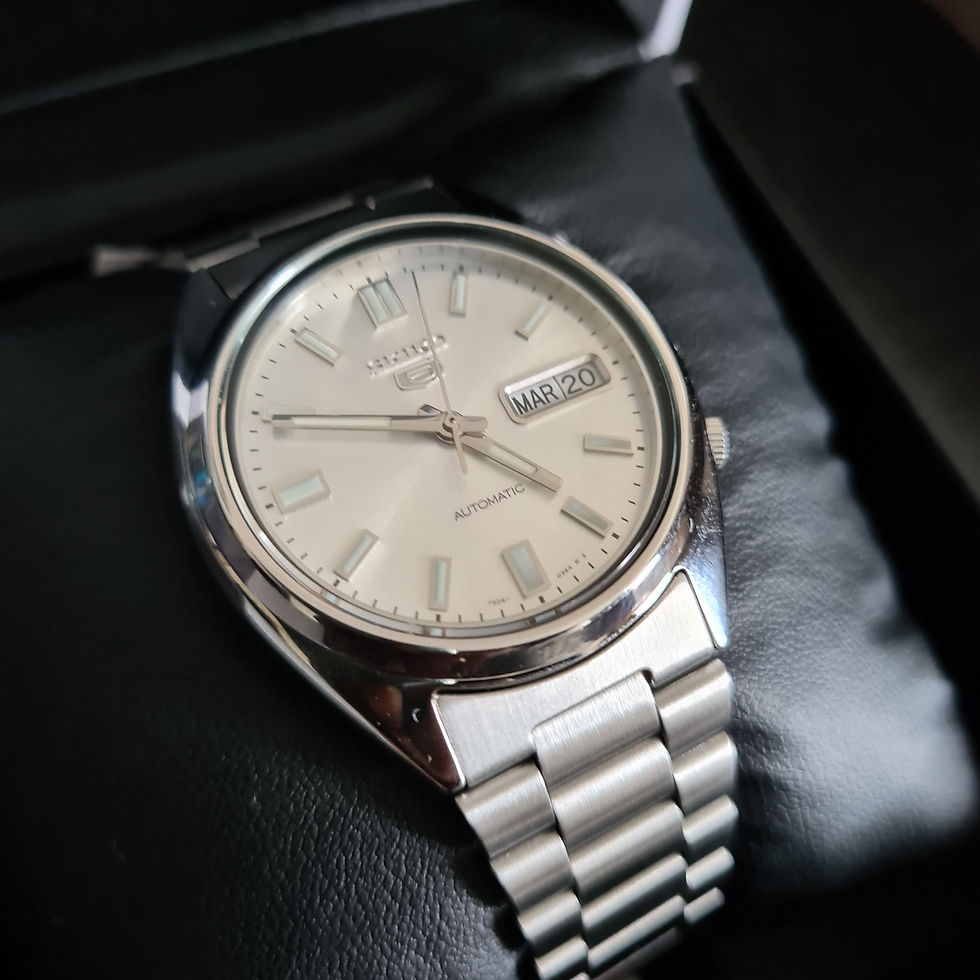
Worst Seiko Bracelet
Original SNXS series
It was close between the SNXS and SKX. Fantastic watches, but the bracelets feel like it came free in your favourite cereal or in a kinder egg.
Fattest, Ugliest Seiko Watch
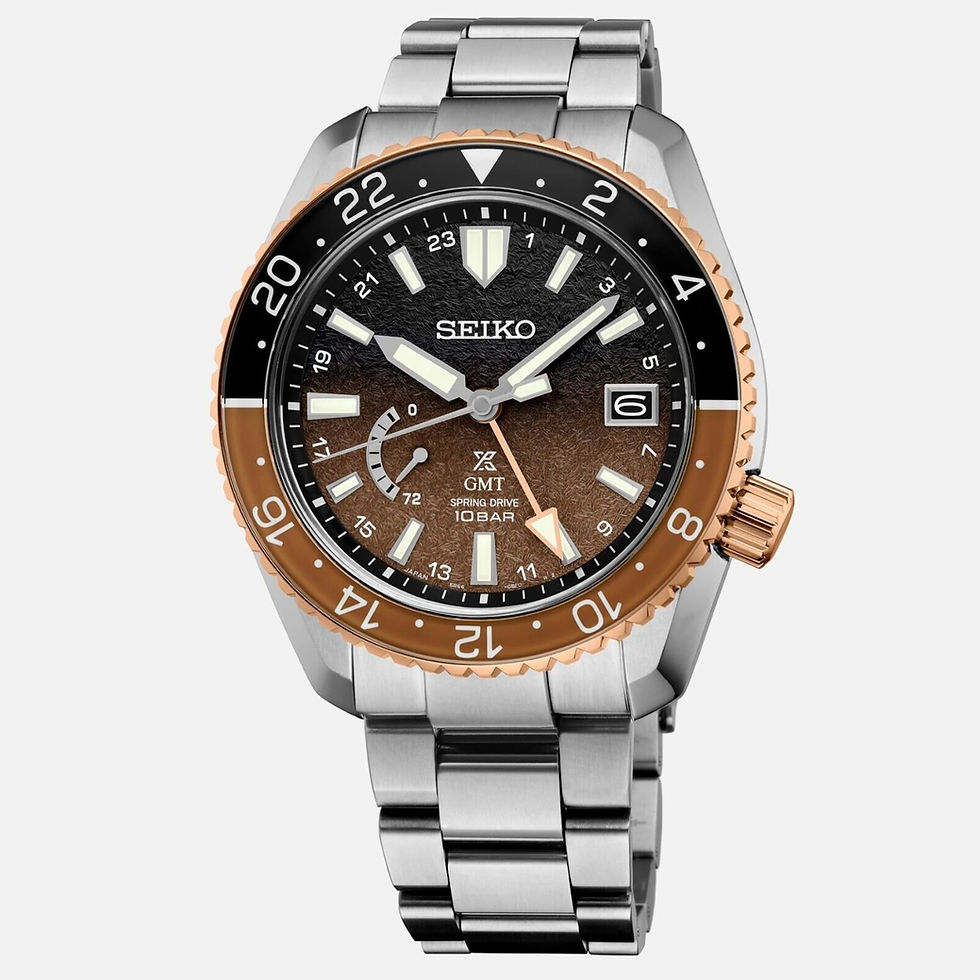
Seiko Prospex LX GMT U.S. Special Edition SNR058
$6,600
No fat shaming here, just facts - it's not heavy cos it's titanium but it is big. Case size is 44.8mm with a 50.9mm lug-to-lug, and a thickythick 14.7mm thickness. They should have two-toned/rootbeered the bracelet too, it doesn't look right. Some would say the Tuna or Arnie - shut it!
Best discontinued Seiko's to hunt down with care
Like I said, don't overpay because the internet has made you emotional, take your time and be rational. Saying that if you've seen one in the flesh, or loved one long time, you'll know it's an emotional thing. I remember seeing mine for the first time. I'm so helpful...
Seiko SARB035
Great proportions, lovely dial, proper everyday versatility.
Read The Theowrist Seiko SARB 035 review here.
Seiko SKX007 or SKX009
Still an excellent diver and everyday Pepsi desk-dive hero. No longer automatically good value. Read The Theowrist Seiko SKX009J1 review here.
Seiko 5 SNXS73 or SNXS79
Almost the best value Seiko ever made. It's a belter, an applied logo, lume-tastic, sunburst dial sporting, day-date, bargain beauty. Read The Theowrist Seiko 5 SNXS73 review here.
Understanding Seiko Movements
One of Seiko's greatest strengths is that it doesn't force you into one type of watch.
4R Series
The 4R34, 4R35 and 4R36 are Seiko's dependable workhorses. They hack, hand-wind, are easy to service and generally keep respectable time without pretending to be chronometer-grade. Think of them as Toyota engines. Reliable. Not glamorous. Exactly what many watches need.
6R Series
The 6R family adds longer power reserves, improved finishing and generally appears in higher-end Prospex and Alpinist models. Don't expect miracle accuracy just because the movement costs more. Some examples are excellent, some less so. Judge the watch, not the specification sheet.
7C46 Quartz
The 7C46 is arguably the toughest quartz movement Seiko has ever produced. Designed specifically for professional diving, it delivers huge torque for oversized hands, around five years of battery life and an enviable reputation for durability. It isn't "just quartz." It's engineering.
Solar
Some watch enthusiasts still dismiss solar watches. They shouldn't. Modern Seiko Solar movements are remarkably accurate, need very little maintenance and make outstanding everyday watches. The Solar Speedtimer is probably the best example.
Spring Drive
Strictly speaking, Spring Drive belongs to Grand Seiko and Credor rather than mainstream Seiko (but a few Prospex pieces do controversially feature it). It combines a mainspring with electronic regulation to produce a perfectly smooth sweeping seconds hand and exceptional accuracy. It's one of the most innovative movements of the last fifty years.
Final Thoughts: Why Seiko Still Works
Seiko remains one of the best watch brands because it does something many brands forget to do: it makes watches people actually wear. Not just admire, photograph and write poetry about. Wear. They have created innovative design classics, cult freak shows and some of the best looking watches ever. What's funny is, for me, that's a SARB035, for someone else it will be the SKX009, for another it will be the OG Alpinist. That's the thing, if you know watches, if you love watches, you have a favourite Seiko.
A good Seiko has a versatile utility. It has design heritage or innovation baked in. It has oddness or quirk with lovers and haters. The hands are often excellent. The lume is usually strong. The cases can be clever. The history is real. The value can still be there, though you now need to be sharper these days. Pre-owned and sales are often the way forward.
The best Seikos are not perfect. That is part of it. The bracelets can annoy you. The crystals can scratch. The accuracy can be broad. The limited editions can come in ridiculous figures (5000 is not the kind of limited that means anything Seiko!). The pricing can creep. The chapter ring may decide to live its own life. And yet, when Seiko gets it right, it really gets it right. The SARB035. The SKX009. The Alpinist. The Turtle. The Speedtimer. The Cocktail Time. The Seiko 5. These watches have stuck around, living rent free in the enthusiasts minds and often in their watch boxes, because they are not empty products. They have identity. They have souls and intricate beating hearts (many of them anyway). That is what you should buy. Saying that, Seiko have to be careful as a plethora of global microbrands bid for varying segments of the market - many offering value, good looks and quality.
Seiko DNA. Not hype. Not specs. Not the discontinued one everyone is suddenly calling “underrated” after hating it loudly for ten years. Buy the Seiko that you love, that fits, does the job, has the design you actually want and makes you look at your wrist slightly more than is reasonable - just to be safe, take it off when you're driving.
That is usually the sign they got it right. And so did you. Oh, if you're a contrarian, you can buy a King Seiko for £3000 / $3850 or something outrageous like that. Why not? Cos, that's Grand Seiko money, and that's another guide for another day...
Yours Seikopathically,
Alvin
LINKS & THINGS
QUICK BUDGET GUIDE.
Budget | Recommended Seikos | Why Buy? | Watch Out For |
Under £300 / $350 | Seiko 5 Sports SRPD55, SRPD53, SRPK29, SRPK31, SRPK89, SRPL55, SRPL57, Field SRPJ85. SNXS73, SNXS79, SNXS77 (new old stock) | Outstanding value, reliable automatic movements, excellent lume and huge variety. Still one of the best entry points into mechanical watches. | Hardlex, basic bracelets and paying inflated prices for discontinued SNXS models. |
£300–700 / $350–850 | Prospex SPB317, SPB121 Alpinist, SPB155 Baby Alpinist, SRPE93 Turtle, SRPF03 Samurai, SSC813 Speedtimer Solar, SSC911, SRPB43 Cocktail Time, SSA459 Cocktail Time Power Reserve, SSK001, SSK003, SSK005, SSK025 GMTs. | Seiko's sweet spot. Better finishing, stronger specifications and watches capable of staying in a collection for decades. | Shop around, few Seikos in this bracket need to be bought at full retail. |
£700–1,500 / $850–1,800 | Higher-end Prospex divers, premium Presage, mechanical Speedtimers. SPB381 GMT Diver, SPB383 GMT Diver, SPB453 62MAS, SPB143, SPB509 Alpinist GMT, SBBN045 Tuna, SBBN047 Tuna, SRQ055 Mechanical Speedtimer, SRQ053 Mechanical Speedtimer | Excellent watches, but this is where Seiko starts competing directly with brands like Longines, Oris, Sinn and Christopher Ward. | If you're spending over about £800, compare carefully. You're no longer buying the obvious value proposition. |
Over £1,500 / $1,800 | Marinemaster, flagship Prospex, King Seiko, premium mechanical chronographs. SJE101 Marinemaster 1965 Diver, SLA079 Marinemaster, SLA081 Marinemaster, SLA073, King Seiko SJE089, SBGN (Grand Seiko Quartz), SBGA (Grand Seiko Spring Drive) | Buy because you genuinely want that Seiko, not because it's automatically the best watch for the money. | If you're spending over £1,500, always compare against Grand Seiko and the wider Swiss market before committing. |
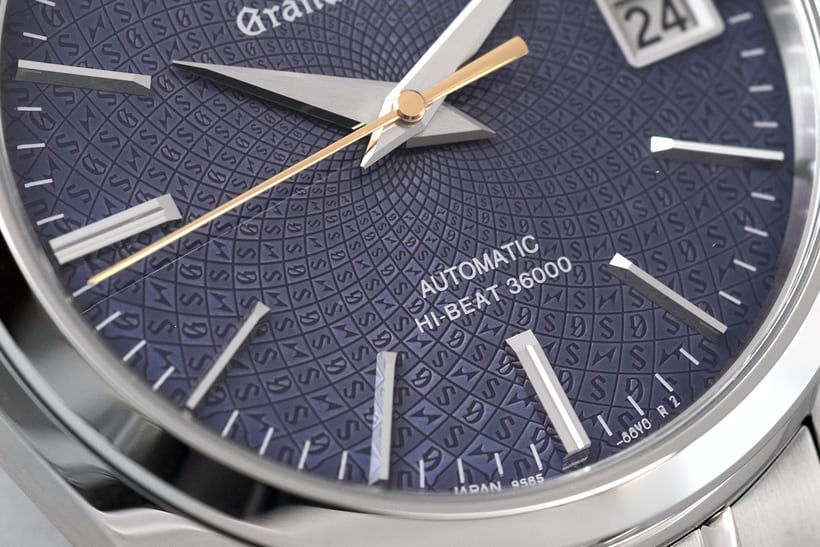
Seeing as Grand Seiko have popped up here, I will touch on them quickly. People often assume Grand Seiko is simply Seiko with nicer polishing. It isn't. Grand Seiko was launched in 1960 as Seiko's pursuit of absolute precision and finishing. Today it operates as a separate luxury brand with its own identity, movements and manufacturing philosophy.
Ordinary Seiko focuses on value, innovation and practical everyday watches. Grand Seiko focuses on craftsmanship, precision and refinement. They're related, but they're aimed at different buyers. If your budget stretches comfortably beyond £2,000, you should almost certainly be comparing both before making a decision. For many enthusiasts, a great £600 Seiko and a great £4,000 Grand Seiko aren't substitutes. They're simply different chapters of the same story. Grand Seiko are lauded for their dial designs, and they beautiful - my fave is the whirlpool SBGH267 - only issue being it doesn't have a spring drive.
SEIKO
MONSTER
TUNA
ARNIE
SAMURAI
Seiko Prospex LX GMT U.S. Special Edition SNR058


Comments