


PRE-OWNED WATCH BUYING GUIDE | Find the Best Deal and Avoid the Traps

Updated: Jul 26
I spend too much time looking at pre-owned watches. I have a problem, I admit it. This is bad for productivity, storage space and any lingering belief that the collection is almost complete. It is, however, useful when it comes to knowing where to look, how to compare prices and how to spot the difference between a genuine deal and an expensive error.
I have bought pre-owned watches costing roughly £50 through to luxury pieces around £5,000. Most of those purchases have gone perfectly well. I have had over 50 watches in the collection, and at least half of them have been bought pre-owned/second hand. Some required more research than others, particularly when buying from private sellers or overseas. And so, all images (unless otherwise stated) are of watches I've bought in the pre-owned market.
This guide is based on my experience, on the process I use myself: establish exactly what you're looking for, search widely, compare the same watch across different platforms, investigate the seller and calculate the real price before buying. Boom, your savings are gone - but you managed to buy two of your faves instead of one.

It also includes a non-exhaustive list of questions to ask the seller. You will not need every question for every watch, but you should need more than “best price mate?” before sending a stranger several thousand pounds.
If you're getting TL;DR vibes then you can just shoot me an email and I can help find you the watch you want - get in touch. The video below shows the process in practice, including how I compare Chrono24, eBay and dealer websites to find the same watch at the best total price.
The Short Version
Before buying a pre-owned watch:
Identify the exact model and reference.
Establish its retail, grey-market and pre-owned prices.
Search more than one marketplace.
Check whether the same seller lists it elsewhere.
Compare condition, accessories and warranty, not just price.
Calculate shipping, import charges and likely servicing.
Research both the watch and the seller.
Ask for additional information before paying.
Use a protected payment method.
Be prepared to walk away.
The central lesson is simple:
Do not merely search for the cheapest watch. Search for the best total deal.
Those are not always the same thing.
Start With the Exact Watch
Before opening eBay, Chrono24 and seventeen browser tabs you will later pretend are research, establish exactly which watch you want.

Find the full reference number rather than searching only for something broad such as “Tudor Black Bay” or “Omega Seamaster”.
The same watch family may include:
Different case sizes
Different generations
Automatic and quartz movements
Bracelet and strap versions
Steel, gold and two-tone models
Revised clasps
Updated movements
Different dial configurations
Similar-looking references with very different values
You need to know enough about the model to recognise when a listing is wrong.
Check:
Full reference number
Approximate production period
What the box and papers look like
Case size
Lug-to-lug and thickness
Movement
Bracelet or strap reference
Clasp type
Dial and bezel configuration
Water resistance
Whether it is current or discontinued
Known faults or costly service requirements
Common replacement or aftermarket parts
Keep the official product page open where possible. It gives you a baseline against which to compare the specifications and appearance of the used examples. A surprising number of sellers get basic details wrong. Sometimes it's an innocent mistake. Sometimes the dial, bracelet and reference number appear to have met for the first time in the listing.
Establish a Sensible Target Price
Don't begin with the assumption that the cheapest listing is the correct market price.
Look at the original retail price, current retail price if the watch is still available, grey-market (authentic watches that are sold outside a brand's official, authorized distribution network) prices and several pre-owned examples. The purpose is to understand the range and set a realistic target.
Compare:
Dealer asking prices
Private seller asking prices
Recently sold eBay listings
Auction results
Chrono24 listings
Specialist pre-owned dealers
Watch valuation and market-tracking websites
Current new or discounted stock
Make sure you are comparing like with like.
A watch-only private sale with scratches and no service history is not directly comparable with a full-set dealer example carrying a warranty. Nor is a freshly serviced watch necessarily expensive simply because another example is listed for £500 less.
The cheaper watch may need a £900 service. It has been known.
A Real Example: Searching for a Tudor Black Bay S&G.

At the time of recording, its listed retail price was £5,380. Based on the pre-owned market and the way many Tudor models depreciate, my target was to find a good example below £3,000.
The first Chrono24 search produced 73 listings worldwide.
Some of the lowest prices were in Japan and Hong Kong. That is common enough, particularly for watches with healthy international supply. The initial prices looked attractive, but several examples had problems:
One lacked the bracelet
Another had visible damage
Some were in noticeably poorer condition
Shipping had to be added
UK import charges still had to be considered
I then narrowed the search to the UK. A dealer had the watch listed at £2,895 on Chrono24. The same seller appeared on eBay at the same price, where a promotional discount was also available. The important step was not stopping there. I searched the dealer’s name, found its own website and located the same watch for £2,675. Same seller. Same watch. Different platform. £220 less before accounting for the eBay voucher.
That is the central trick in this guide. It is obvious once explained, but it is easily overlooked:
When you find a watch, search for the seller as well as the model.
Dealers often list the same inventory on their own website, Chrono24 and eBay. Marketplace fees, promotional codes and offer systems/fee structures can produce different prices on each one.
Cross-Reference Every Platform
Do not assume the dealer’s website will always be cheapest. Sometimes it is. Sometimes eBay has a voucher. Sometimes a marketplace allows offers while the dealer’s own website does not.

Chrono24 logo 
eBay logo
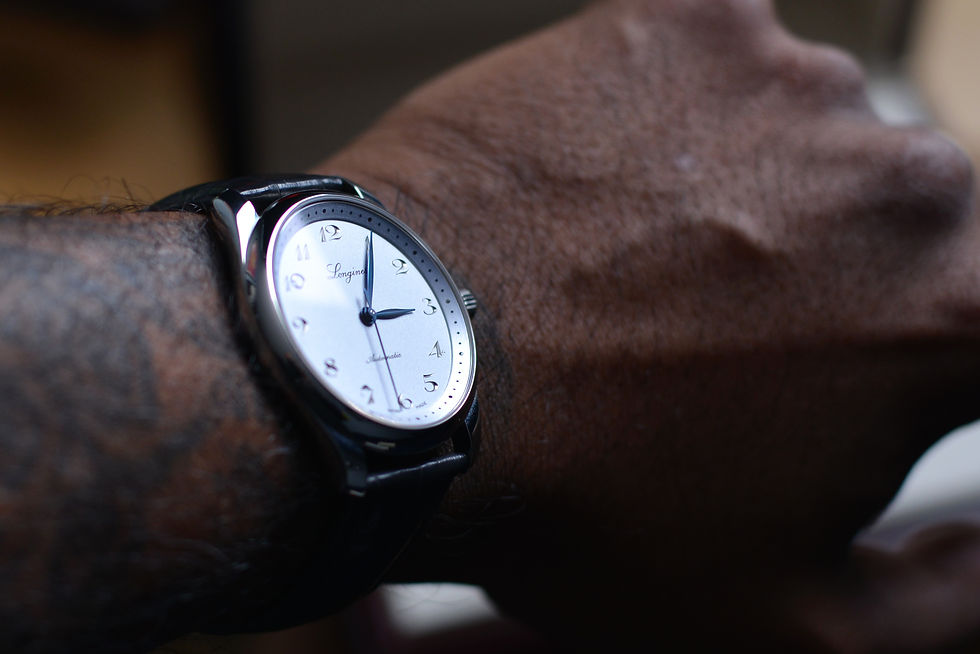
I once bought a Seiko from WatchNation. Its website did not allow offers, but its eBay listing did. I made an offer and bought it for less. I also bought a Longines from Subdial through its eBay shop before Subdial accepted offers directly on its website. Again, the marketplace produced the better deal.
When you find a watch, check:
The dealer’s own website
Chrono24
eBay
Google Shopping results
Specialist pre-owned platforms
The seller’s social media
Any other marketplace on which the dealer operates
Use the full reference number, dealer name and distinctive fragments from the listing description.
You may also find that one platform has better photographs, fuller condition notes or more complete information about the accessories. Even when the price is identical, the additional listing may tell you something useful.
Why prices differ
A dealer may charge less through its own website because it avoids marketplace fees.
A marketplace may nevertheless be cheaper because it offers:
Discount codes
Buyer vouchers
Reduced-price promotions
An offer function
Different shipping terms
Platform-funded discounts
Do not assume. Check.
This is the sort of research that can save hundreds of pounds in ten minutes, which is far more productive than spending three hours reading an argument about whether a watch is technically a GADA piece.
Compare the Total Cost, Not the Listing Price
An overseas watch can look dramatically cheaper until it reaches the checkout, customs or a courier’s administration department. For UK buyers, goods sent from outside the UK may attract import VAT, Customs Duty and courier handling charges. HMRC advises buyers to check what is payable before the goods arrive.
Calculate:
Watch price + shipping + insurance + import VAT + Customs Duty + courier fees + likely repairs or servicing
In the Tudor example, a Japanese watch initially appeared cheaper. Once shipping and roughly 20% import VAT were considered, the landed cost was close to the UK dealer’s price. The UK watch was also in better condition and easier to return if something went wrong.
The overseas listing was cheaper. The overseas purchase was not.
Other costs buyers forget
Remember to account for:
Missing bracelet links
Replacement straps
A damaged clasp
Polishing or case repair
A new crystal
Bezel or insert replacement
Battery replacement
Pressure testing
A full movement service
Return shipping abroad
Currency conversion fees

Bracelet links are particularly irritating. A missing steel link might be manageable. A discontinued gold or titanium link can become a small international research project of its own.
Where to Search for Pre-Owned Watches
Chrono24
Chrono24 offers an enormous range of watches from professional dealers and private sellers around the world.
Its strongest feature is the ability to compare international stock quickly. It is also useful for understanding the broad asking-price range for a particular reference. Chrono24 states that purchases from professional dealers using its Buyer Protection system are held in escrow for 14 days after delivery. For private seller purchases, funds are held for seven days. However, buyers do not have the same legal right of withdrawal when purchasing from a private seller.

Some eligible listings also use Chrono24 Certified. Its checks can include authenticity, functionality, the listed accessories and a serial-number search against stolen-watch databases.
That is useful protection, but it does not remove the need to inspect the condition, read the listing and research the seller.
eBay
eBay remains useful for affordable watches, discontinued references and private listings. It is also a good place to cross-reference a professional seller found elsewhere. Eligible watch listings priced at £1,500 or more receive eBay’s Authenticity Guarantee badge. The watch is sent to an authentication facility for inspection before being forwarded to the buyer. Eligibility restrictions apply, so check the badge and programme terms on the individual listing rather than assuming every expensive watch is covered. The feedback system can be extremely useful, provided you actually read it.

A seller may have 1,000 positive reviews, but if 999 are for socks and one is for a watch, you do not really have 1,000 watch-buying references. You have a highly regarded sock merchant who sold his watch to buy more socks.
Check:
What the seller usually sells
The value of previous sales
Recent feedback
Negative and neutral comments
How disputes were handled
Whether previous watches matched their descriptions
Whether the account has suddenly changed activity
Whether feedback was gained as a buyer or seller
The headline percentage is only the beginning.
Specialist pre-owned dealers
Established dealers usually charge more than private sellers, but the additional price may include:
Authentication
A written condition report
A warranty
Servicing or testing
A returns process
Insured delivery
A business you can pursue if something goes wrong
I rate Subdial highly based on my own purchase. It carries an interesting selection, accepts offers on many watches and provides a polished service. Its current listings advertise authentication, a 12-month warranty and 14-day returns. They sell for other people as well (consignment) but I think they have high standards in what they choose to sell. Other dealer platforms may offer similar benefits. Always check the current terms attached to the particular watch.
Forums, Reddit and WatchCrunch
Forums and enthusiast communities are valuable for model-specific research.
Search the exact reference and look for:
Ownership reports
Known problems
Service costs
Bracelet complaints
Real wrist photographs
Discussions of dial or case variants
Comparisons with similar watches
Previous sales listings
Reddit, WatchCrunch and brand-specific forums can help reveal details that do not appear in official specifications.
They are less reliable for hard facts. Treat comments as leads rather than documentation. One confident forum post does not override an official archive, service document or manufacturer source.
If you find someone who owns the exact watch, ask them about it. Enthusiasts are usually willing to discuss their watches... stopping them is the more difficult part.
Research the Seller, Not Just the Watch
The old advice to “buy the seller” remains useful, but it is not enough by itself.
A reputable seller can still describe a watch poorly. A private seller with little history can still own a perfectly genuine watch. You need to assess both.

Search the dealer’s name
Look for:
A registered company
A real address
An established website
Google reviews
Chrono24 reviews
eBay feedback
Companies House records for UK businesses
Social media history
Telephone details
Previous mentions on forums
A dealer does not need to sell directly through its own website. Some use Chrono24 or eBay as their main storefront.
However, a seller with very few marketplace reviews and no other trace online presents a greater risk than one with years of relevant sales history. No external website is not necessarily a problem. No website, no history, no reviews, no address and a Rolex at half price is beginning to form a pattern.
This is a lot, but you're a watch fanatic damn it, this is what we do. And once you've created a process and found the sites and sellers that you like, you will create a system. Then, you'll be in real trouble...
Read the recent reviews
Reviews from ten years ago tell you that the business once completed a transaction successfully. Recent reviews tell you what is happening now.
Look particularly for comments involving:
Incorrect condition descriptions
Slow refunds
Disputed authenticity
Missing accessories
Poor communication
Watches arriving damaged
Problems with returns
Service-history claims that could not be supported

Also look at how the seller responds. A dealer who deals calmly with a reasonable complaint is more reassuring than one who begins threatening litigation because somebody mentioned a scratch.
Look for relevant experience
A private seller who has sold several watches successfully may be less risky than a new account selling its first luxury watch. Search usernames across eBay, forums and social platforms. People often reuse the same handle. This may confirm that they have participated in the watch community for years. It may also confirm something else.
Either result is useful.
Buying From a Private Seller
Private sellers can offer some of the best deals.
They may price below dealers because they do not have business overheads, warranties or marketplace stock costs. Their watches may also sit unsold for longer because many buyers prefer the comfort of a dealer.
That creates an opportunity, but only when you are comfortable with the seller, watch and payment process.
I have bought a Cartier from a private seller in Singapore through Chrono24. The platform’s escrow arrangement gave me some reassurance, but I still had to research the seller and watch thoroughly before paying. At a point, you've got to trust a bit. So, ask all the questions you need to. The work needs to happen before the purchase. Resolving an international dispute after the watch arrives is not impossible, but it can become a tremendous kerfuffle involving time zones, couriers and a growing desire never to collect anything again.
Private seller protections are different
UK buyers generally receive a 14-day cooling-off period when buying online from a business, subject to exceptions. That automatic right does not normally apply when buying from a private individual. Private sellers must not misdescribe what they are selling, but you should not assume you can return the watch simply because you have changed your mind.
Ask direct questions in writing and keep the responses.
The more specific the seller’s description, the clearer the position will be if the watch arrives materially different.
Inspect the Watch Properly
Magnify the photographs.
Do not restrict yourself to the front-facing glamour shot. It is usually the photograph least likely to reveal anything unpleasant.
Look for images of:
The dial
Each side of the case
The lugs
The crown
Pushers
Caseback
Bezel
Crystal from several angles
Bracelet and end links
Clasp
Box and paperwork
Reference and serial information where appropriate
Ask for more photographs if necessary.
Condition
Check for:
Scratches
Dents
Chips
Corrosion
Moisture damage
Bracelet stretch
Damaged screw heads
Poorly fitting end links
Missing links
Deep clasp damage
Worn crown threads
Bezel damage
Crystal marks
Some marks are normal. Others are expensive. The Tudor in the video provided a good example. One listing had a substantial ding to the bezel area. The seller had disclosed it, which was good. The asking price did not remotely compensate for it, which was less good.
Gold and two-tone watches deserve particular attention because gold is softer than steel and replacement components can be costly.

Polishing
Ask whether the watch has been polished.
A light professional refinish on a modern watch may be perfectly acceptable. Heavy or repeated polishing can alter:
Lug shape
Case edges
Bevels
Crown guards
Brushed surfaces
Polished transitions
Overall proportions
For vintage watches, an unpolished or sympathetically polished case may command a premium.
Do not rely entirely on the seller saying “unpolished”. Compare the watch with known original examples and decide whether the case geometry supports the claim.
Originality
Ask whether the following are original:
Dial
Hands
Bezel
Bezel insert
Crown
Crystal
Movement
Caseback
Bracelet
Clasp
End links
A service replacement is not necessarily bad. A replacement crown or crystal may improve reliability and water resistance.
It should still be disclosed, particularly where originality affects collector value.
An aftermarket dial described as original is a different matter.
Box and Papers: Useful, but Not Proof
A full set can add value and make resale easier.
Papers may help establish:
Original sale date
Retailer
Reference
Serial number
Warranty history
Country of purchase
They do not prove that the watch is authentic. Boxes, cards, booklets and tags can all be purchased separately. A genuine card can also be paired with the wrong watch.
Check that:
The reference matches
The serial matches
The date makes sense
The accessories suit the period
The seller’s account remains consistent
Do not buy a poor watch because it comes with excellent bits 'n' bobs.

Service History and Mechanical Condition
Ask when the watch was last serviced and what was actually done.
“Recently serviced” can mean:
A full manufacturer overhaul
An independent movement service
Regulation
Lubrication
A battery change
The seller wore it for an afternoon and it did not stop
Ask for invoices and service records.
Also ask:
Who completed the work?
Which parts were replaced?
Is there a service warranty?
Was the case refinished?
Was it pressure tested?
Were the original parts returned?
Accuracy
For a mechanical watch, a recent timegrapher reading can be useful.
Ask for:
Daily rate
Amplitude
Beat error
The position in which it was tested
Whether the watch was fully wound
A timegrapher result is only a snapshot. A watch can display an acceptable rate while still needing attention elsewhere.
Also ask whether:
It achieves its expected power reserve
Winding feels normal
The crown screws down correctly
The date changes correctly
The chronograph starts, stops and resets
Every complication operates
The rotor makes unusual noise
Water resistance
Do not assume that a watch remains water resistant because the dial says 200 metres.
Ask whether it has passed a recent pressure test.
If the answer matters because you intend to swim with it, arrange your own test before doing so. A vintage dive watch and a swimming pool should not be introduced on the strength of optimism.

Questions to Ask When Buying a Pre-Owned Watch
This list is deliberately non-exhaustive. Use the questions relevant to the watch, seller and price. Obviously, approach with tact, don't blitz the seller with a million questions, have a conversation.
1. Authenticity and provenance
What is the complete model reference?
Is the watch guaranteed to be authentic?
How has its authenticity been established?
Do you provide a written authenticity guarantee?
Does the serial number match the paperwork?
Where did the watch come from?
How long have you owned it?
Did you buy it new or pre-owned?
Why are you selling it?
Do you have the original purchase invoice?
Has it been checked against a stolen-watch database?
Is there any outstanding finance or ownership dispute?
Have any identifying details been removed or altered?
Can you provide proof that the watch is currently in your possession?
2. Originality
Is the dial original?
Has the dial been refinished?
Are the hands original?
Have the hands or markers been relumed?
Is the bezel or bezel insert original?
Is the crown original?
Is the crystal original or a service replacement?
Is the bracelet original to the watch?
Are the clasp and end links correct?
Has the movement been replaced?
Are any components aftermarket?
Has the watch been modified in any way?
Are there any service replacement parts?
3. Condition
How would you describe the overall condition?
Are there any scratches, dents or chips not visible in the photographs?
Is there any corrosion or moisture damage?
Has the watch ever been polished?
Is there noticeable bracelet stretch?
Are there any damaged screws?
Does the clasp close securely?
Does the bezel rotate correctly?
Does the crown wind and screw down properly?
Is the crystal marked?
Are there any faults or intermittent problems?
Can you send additional photographs in natural light?
4. Service history and performance
When was it last serviced?
Who completed the service?
Was it a full movement service or something more limited?
Are service records included?
Were any parts replaced?
Is there a service warranty?
Is the watch running accurately?
Can you provide a recent timegrapher reading?
Does it achieve its expected power reserve?
Do all complications work?
Has it recently passed a pressure test?
5. Box, papers and accessories
Does it include the original box?
Are the original papers included?
Is the warranty card dated and stamped?
Do the serial and reference match the watch?
Are all bracelet links included?
What wrist size does the bracelet currently fit?
Are spare straps or buckles included?
Are any tags, booklets or accessories missing?
Are all the photographed accessories included in the sale?
Is the original purchase or service invoice available?
6. Seller credibility
Are you a dealer or private seller?
How long have you sold watches?
Do you have references from previous buyers?
Have you sold watches of similar value before?
Do you have feedback on other platforms?
What is your registered business name and address?
Can we speak by telephone or video call?
Can you provide a new photograph showing the watch, your username and today’s date?
Do you offer an authenticity guarantee?
What happens if the watch is found to be counterfeit or materially misdescribed?
7. Price and payment
Is the price negotiable?
Does the price include VAT?
Are there any additional buyer or platform fees?
Is delivery included?
Are there likely to be import charges?
Which payment methods do you accept?
Is payment protected by the platform?
Will the money be held in escrow?
Will I receive an invoice or receipt?
Can I have the watch inspected independently before completion?
Is an appraisal or valuation included?
Who produced the valuation?
8. Returns and warranty
Do you accept returns?
How long is the return period?
Can I return the watch if I change my mind?
Who pays for return shipping?
Must tags remain attached?
Can the bracelet be resized during the return period?
Are any deductions made from the refund?
What does the warranty cover?
What does it exclude?
Who performs warranty repairs?
Is the warranty transferable?
What is the process if the watch is not as described?
9. Shipping and collection
Where is the watch physically located?
Is it currently in your possession?
Will it be fully insured in transit?
Does the courier’s insurance cover watches and jewellery?
Which courier will you use?
Will tracking and signature confirmation be provided?
How will it be packaged?
Who is responsible if it is lost or damaged?
Will the customs declaration show the correct value?
Can I collect and inspect the watch in person?
Making an Offer
It is usually worth making an offer, particularly where:
The watch has been listed for a long time
The seller openly accepts offers
Several similar examples are available
The condition is below average
The watch lacks box or papers
A service is due
You can complete the purchase immediately
A cheeky offer is fine. An absurd offer generally wastes everyone’s time and may make the seller less interested in negotiating with you.
Base the offer on something:
Comparable listings
Missing accessories
Condition
Service requirements
Import costs
Length of time advertised
Do not send a dealer a long essay explaining that their £6,000 watch is worth £3,200 because a damaged one sold at auction in 2019. Make a reasonable offer and be prepared for a reasonable counter/refusal.
Using AI to Research a Watch
AI can be useful during the research process. In the video, I discussed a suspicious Cartier listing. The watch appeared inconsistent with other examples of the supposed reference, including the presence of a seconds hand.
AI helped identify possible explanations, including:
An incorrectly identified reference
Aftermarket modification
A mismatched or “Frankenstein” watch
A genuine but unusual variant requiring further research
It did not prove the watch was fake.
Use AI to:
Generate research questions
Identify possible references
Compare specifications
Find terminology
Suggest official sources
Flag apparent inconsistencies
Then verify the answer using:
Official brand archives
Manufacturer pages
Auction records
Reputable dealers
Specialist publications
Movement databases
Collector references
Ask AI for sources and check them. It can be a good research assistant. It shouldn't be the final authenticator of a £10,000 watch from three blurry photographs.
Pre-Owned Watch Red Flags
A price that makes no sense
Good deals exist. A desirable watch offered for half its established market value requires an explanation. Possible reasons include:
Counterfeit watch
Stolen watch
Hidden damage
Aftermarket parts
Incorrect reference
Deposit scam
Compromised seller account
A watch that does not exist
The seller may simply need a quick sale. You still need to establish that rather than inventing the most convenient explanation yourself.
Vague or changing answers
Be cautious when the seller cannot clearly explain:
Where the watch came from
How long they have owned it
Whether it has been serviced
Why the paperwork does not match
Why components have been replaced
Why different photographs show different details
The story should become clearer as questions are answered.
Poor or irrelevant feedback
Bad feedback is not automatically fatal. Large dealers will occasionally have unhappy customers.
Look at the nature, frequency and recency of the complaints.
Several disputes involving authenticity, non-delivery or misdescription matter more than somebody being annoyed that the parcel arrived on Tuesday rather than Monday.
Also confirm that the seller’s history relates to watches or other valuable items, not only cheap purchases used to build an attractive feedback score.
Stock or stolen photographs
Ask for a fresh photograph with the current date and seller’s username.
Reverse-image search the listing photographs where appropriate.
Copied dealer images, mismatched backgrounds and photographs taken from several different listings are not comforting.
Pressure to leave the platform
A seller may have the same watch listed more cheaply on its legitimate business website. That is not automatically suspicious.
The danger is when an unknown seller pressures you to:
Cancel the marketplace transaction
Continue through private messages
Pay by direct transfer
Use an unfamiliar escrow service
Give up platform authentication
Avoid the platform’s dispute process
Understand exactly which protections you lose before leaving a marketplace.
Unprotected payment
Be especially cautious with:
Cryptocurrency
Western Union
Gift cards
Cash by post
Friends-and-family payments
An escrow provider selected by the seller
Direct transfer to an unknown private individual
Credit card protection can be useful when buying directly from a trader. Section 75 may apply where a single item costs more than £100 and no more than £30,000, even when only part of the price is paid by credit card. However, it does not usually apply in the same way when a marketplace or third-party payment provider breaks the direct link between buyer, trader and card issuer. Check the payment structure rather than assuming that using a credit card automatically covers everything.
And pay the card off.
Saving £200 on a watch before paying credit-card interest for several geological periods is not a saving.
No movement or serial photographs
This requires some nuance.
The absence of a movement photograph is not automatically suspicious. Opening a modern watch can damage seals or compromise water resistance. A reputable seller may reasonably refuse to open it for a speculative buyer.
Movement photographs are more important for:
Vintage watches
Rare watches
High-value watches
References commonly assembled from mixed parts
Watches where the calibre determines value
Likewise, sellers often obscure full serial numbers in public advertisements for security reasons.
The red flag is not a hidden public serial. It is a refusal to verify it privately, match it to the paperwork or provide it to an agreed authentication service.
Manufactured urgency
Another buyer may genuinely be interested.
You still do not need to transfer several thousand pounds before completing basic checks.
Missing one watch is irritating.
Buying the wrong one is worse.
What to Do When the Watch Arrives
Do not immediately remove the tags, resize the bracelet and take it swimming.
First:
Record the unopened parcel and unboxing.
Check for damage or signs of tampering.
Confirm that the watch matches the listing.
Check the box, papers and accessories.
Verify the reference and serial information.
Inspect the case, dial, crystal, bracelet and clasp.
Test the crown, date and complications.
Check accuracy and power reserve where practical.
Keep all packaging and tags.
Contact the seller immediately if anything is wrong.
For an expensive watch, arrange an independent inspection during the return period.
Do not polish it, open the case or attempt a repair while deciding whether to keep it. Altering the watch may complicate a return.
So, What Is the Best Pre-Owned Watch Deal?
The best deal is not necessarily:
The cheapest listing
The watch with the most accessories
The nearest seller
The lowest offer accepted
The example with the fewest scratches
It is the watch offering the best combination of:
Price
Condition
Originality
Service history
Seller credibility
Buyer protection
Warranty
Accessories
Future resale
Total landed cost

For a modestly priced watch, accepting scratches or a missing box may be entirely sensible.
For a valuable Rolex, vintage chronograph or complicated movement, paying more for documented history, a strong case and a reputable seller may be the cheaper decision in the long run.
Final Thoughts
Buying pre-owned is one of the best ways to build a watch collection. It opens the door to discontinued references, unusual variants and watches that make far more sense at 60% of retail than they ever did at full price. It also rewards proper research. If you count buying a useless piece of jewellery as a reward, just kidding. It's a crazy thing this obsession of ours. And I think you can tell from the above detail that I kinda know what I'm doing. If you'd like some help buying get in touch.
Find the exact reference. Set a realistic target. Search globally, then compare locally. Check every platform on which the seller operates. Calculate import costs. Inspect the condition properly. Read the feedback rather than admiring the percentage. Ask questions and keep the answers.
Above all, be willing to walk away. There will usually be another one. Even rare watches have a habit of becoming surprisingly common immediately after you overpay for one.
Yours Oversharingly,
Alvin
FAQ
Is it safe to buy a pre-owned watch online?
Yes, provided you research the seller and watch, use protected payment methods and understand the returns process. Buying from an established dealer usually provides more protection than buying directly from a private seller.
Is Chrono24 safe for private purchases?
Chrono24’s escrow service offers useful payment protection, but private purchases do not include the same legal right of withdrawal as purchases from professional dealers. Research the seller, keep communication on the platform and inspect the watch promptly after delivery.
Does box and papers prove a watch is authentic?
No. They can support provenance and increase value, but boxes and paperwork can be purchased separately or matched with the wrong watch.
Should I ask for a movement photograph?
For a valuable vintage or rare watch, movement photographs or an independent inspection may be important. For a modern sealed watch, asking an unqualified seller to open the case may do more harm than good.
Should I buy a pre-owned watch from abroad?
It can make sense where the watch is significantly cheaper or difficult to find in the UK. Calculate shipping, VAT, duty, handling fees and the cost of a possible overseas return before buying.
Is it better to buy from a dealer or private seller?
A dealer generally offers stronger returns, warranty and consumer protection. A private seller may offer a lower price, but more responsibility falls on the buyer to investigate the watch, seller and payment arrangements.
Should I pay for a watch by credit card?
It may provide useful protection when buying directly from a trader, particularly for items costing between £100 and £30,000. However, Section 75 may not usually apply where a marketplace or payment intermediary sits between you and the seller. Check the payment structure and platform terms before relying on it.


Comments